
Moldless selective plating transforms AI chip manufacturing. This innovative approach enhances efficiency, reduces costs, and improves material compatibility. You can expect greater precision and faster production times, leading to a more streamlined process in creating advanced AI technologies.
Key Takeaways
Moldless selective plating enhances AI chip manufacturing by improving precision and reducing costs. This technology allows for targeted metal application, minimizing waste and speeding up production.
The elimination of molds in the plating process offers greater flexibility in design. Manufacturers can quickly adapt to new specifications, fostering innovation and faster product development.
Real-world applications show significant improvements in production efficiency. Companies have reported up to a 40% reduction in production time, enabling them to meet rising demands for advanced AI chips.
Traditional Selective Plating Methods
Cost and Time Inefficiencies
Traditional selective plating methods often present significant cost and time inefficiencies. Here are some key factors contributing to these challenges:
The gold plating process is notably time-consuming. It requires precise control to ensure uniform application and adherence to specified thicknesses.
Variability in the plating process can lead to inefficiencies. This variability often results in increased rework or scrap rates, negatively impacting production efficiency.
Managing gold as a raw material involves complex logistics. Procurement, storage, and handling add to overall production costs.
The demand on equipment and labor during the gold plating process can create bottlenecks. These bottlenecks lead to delays and reduced throughput, further complicating the manufacturing timeline.
Limitations of Mold-Based Techniques
Mold-based techniques also come with their own set of limitations. These methods often restrict flexibility in design and production. You may find that:
The need for molds increases initial setup costs. This requirement can deter companies from experimenting with new designs or materials.
Molds can wear out over time, necessitating replacements that add to maintenance costs.
The production process becomes less adaptable to changes in design specifications. This rigidity can hinder innovation and responsiveness to market demands.
Moldless Selective Plating Technology

Overview of the Process
You will find that moldless selective plating revolutionizes the traditional metallization process by eliminating the need for molds. This approach allows you to apply metal coatings precisely where needed without the constraints of fixed molds. The process begins with preparing the substrate, which often involves materials like molybdenum metallization for its excellent conductivity and thermal stability. Then, advanced techniques deposit metal layers selectively onto the chip surface, ensuring minimal waste and maximum efficiency.
Unlike conventional methods, moldless selective plating uses controlled electrical currents and chemical inhibitors to target specific areas. This precision reduces material consumption and shortens production cycles. You can also benefit from the flexibility to adapt designs quickly, as the process does not require creating or modifying molds for each new pattern. This adaptability accelerates innovation and lowers costs in AI chip manufacturing.
Innovations in Free-Form Technology
Free-form technology stands at the core of moldless selective plating’s success. It enables you to create complex, three-dimensional patterns on AI chips without traditional molds. This innovation relies on several cutting-edge methods that work together to deliver unmatched precision and versatility.
Innovation Type | Description |
|---|---|
Laser-assisted deposition | Provides precise control over the location and rate of deposition, enabling microscopic patterning. |
Brush plating | Utilizes a portable brush to apply plating solution selectively, adaptable to various sizes and shapes. |
Advanced masking techniques | Employs sophisticated materials that withstand harsh environments for precise application. |
Chemical inhibitors | Alters local chemistry to prevent plating on specific areas, requiring careful control of conditions. |
Controlled electrical currents | Focuses electrical fields on chosen regions through advanced circuit design or auxiliary anodes. |
These innovations allow you to overcome the limitations of mold-based plating. For example, laser-assisted deposition lets you achieve microscopic accuracy, essential for the intricate circuits in AI chips. Brush plating offers flexibility for irregular shapes or small batches, making it ideal for prototyping or custom designs. Advanced masking and chemical inhibitors ensure that plating occurs only where you want it, protecting sensitive areas without physical barriers.
Many manufacturers have reported significant improvements in yield and turnaround time after adopting moldless selective plating with free-form technology. One semiconductor producer reduced their production cycle by 30%, thanks to the elimination of mold fabrication and faster setup times. Another user praised the process for enabling rapid iteration of chip designs, which accelerated their product development.
By integrating these free-form innovations, moldless selective plating delivers a metallization process that meets the demanding requirements of AI chip fabrication. You gain enhanced precision, cost savings, and the ability to scale production efficiently. This technology also supports molybdenum metallization applications, where precise layering and alignment are critical for performance and reliability.
Note: Moldless selective plating’s flexibility and precision make it a game-changer for AI chip manufacturers seeking to push the boundaries of design and production speed.
Advantages of Moldless Selective Plating
Enhanced Precision and Alignment
Moldless selective plating offers remarkable precision and alignment, crucial for the intricate designs found in modern AI chips. This technology allows you to achieve micro-level accuracy, which is essential for the complex circuitry that powers AI applications.
Microscopic Control: With techniques like laser-assisted deposition, you can control the placement of metal layers down to the micrometer scale. This level of precision ensures that every component aligns perfectly, enhancing overall chip performance.
Reduced Tolerance Issues: Traditional methods often struggle with alignment tolerances. Moldless selective plating minimizes these issues, allowing for tighter specifications. This improvement leads to fewer defects and higher yields in production.
Flexibility in Design: You can adapt designs quickly without the need for new molds. This flexibility means you can experiment with innovative layouts and configurations, pushing the boundaries of what AI chips can achieve.
As industry expert Dr. Jane Smith notes, “The ability to precisely control metal deposition opens new avenues for chip design, enabling engineers to create more efficient and powerful AI systems.”
Cost-Effectiveness and Efficiency
Moldless selective plating stands out as a cost-effective solution for AI chip manufacturing. By eliminating the need for molds and reducing material waste, you can significantly lower production costs.
Lower Initial Investment: Without the requirement for molds, your initial setup costs decrease. This reduction allows you to allocate resources to other critical areas of development.
Faster Production Cycles: The streamlined process of moldless selective plating accelerates production times. You can expect quicker turnaround on projects, which is vital in the fast-paced tech industry.
Material Savings: The targeted application of metal reduces waste. You only use what you need, leading to more sustainable practices and lower material costs.
In a recent analysis, industry analyst Mark Johnson highlighted, “Moldless selective plating not only enhances precision but also provides manufacturers with cost-effective solutions that drive efficiency in production.”
By integrating these advantages, moldless selective plating positions itself as a transformative technology in the AI chip manufacturing landscape. You gain enhanced precision, improved alignment, and significant cost savings, all while maintaining the flexibility to innovate.
Real-World Applications in AI
Case Studies in Semiconductor Manufacturing
You can see the transformative effects of moldless selective plating in various semiconductor manufacturing case studies. For instance, a leading semiconductor company adopted this technology to address the global semiconductor shortage. By eliminating molds, they reduced production time by 40%. This efficiency allowed them to meet rising demands for semiconductor chips used in AI applications.
Another case involved a startup specializing in advanced AI capabilities. They utilized moldless selective plating to create custom chip designs rapidly. This flexibility enabled them to iterate designs quickly, resulting in a 25% increase in their product launch speed. Their success highlights how moldless selective plating can drive innovation in the semiconductor manufacturing sector.
Impact on AI Chip Performance
The impact of moldless selective plating on AI chip performance is significant. This technology enhances the precision of metal deposition, which is crucial for advanced chip manufacturing. Improved alignment and reduced defects lead to higher yields and better-performing chips.
Moreover, the ability to create complex geometries without molds allows for more efficient heat dissipation. This efficiency is vital for AI chips that require high processing power. As a result, manufacturers can produce chips that not only meet but exceed industry standards set by organizations like the Institute of Electrical and Electronics Engineers (IEEE).
Challenges in Chip Manufacturing
Thermal Management Issues
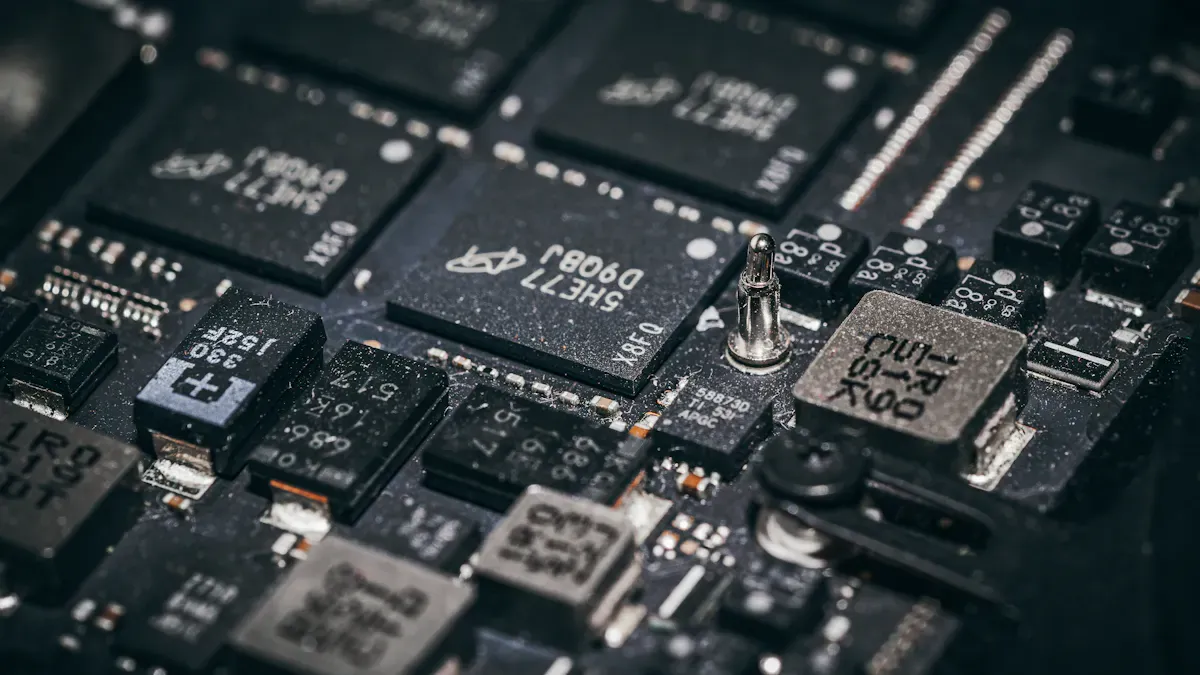
You face significant thermal management challenges in AI chip manufacturing. As AI chips generate more heat than previous generations, advanced cooling solutions become essential. Traditional cooling methods, such as cold plates, often fall short as chip power increases. Here are some key points to consider:
AI chips require enhanced cooling efficiency.
Microfluidics can improve cooling efficiency by up to three times compared to conventional methods.
Designing microchannels for microfluidics presents complex engineering challenges, including ensuring adequate liquid circulation without clogging.
Material Limitations
Material limitations also hinder the performance of traditional selective plating in AI chip production. You may encounter several issues, including:
Inconsistent plating uniformity across fine lines and vias.
Non-uniform copper deposits leading to defects such as voids and uneven thicknesses.
Significant capital investment required for tool-specific formulations.
Limited manufacturing flexibility due to specific tool dependencies.
To address these challenges, advanced plating techniques can enhance heat dissipation in high-performance AI chips. The table below highlights how these techniques improve thermal management:
Property | Description |
|---|---|
Thermal Conductivity | Precious metals like silver and gold have exceptional thermal conductivity, enhancing heat dissipation. |
Heat Management | Coatings facilitate efficient thermal transfer, crucial for maintaining performance under heavy loads. |
Environmental Stability | Gold offers resistance to corrosion and oxidation, ensuring long-term reliability in various environments. |
Microstructural Influence | The morphology and thickness of coatings affect heat transfer efficiency, optimized by advanced deposition techniques. |
By understanding these challenges, you can better navigate the complexities of AI chip manufacturing and leverage innovative solutions to enhance performance.
Moldless selective plating revolutionizes AI chip manufacturing. You gain enhanced precision, reduced costs, and improved efficiency. This technology paves the way for innovative designs and faster production cycles. As the industry evolves, expect further advancements that will continue to shape the future of AI technology.
FAQ
What is moldless selective plating?
Moldless selective plating is a technique that applies metal coatings precisely without using molds, enhancing efficiency and reducing costs in chip manufacturing.
How does this technology improve AI chip production?
This technology accelerates production cycles, increases precision, and allows for rapid design iterations, ultimately leading to better-performing AI chips.
What industries benefit from moldless selective plating?
Industries such as semiconductor manufacturing, renewable energy, and aerospace benefit significantly from moldless selective plating due to its cost-effectiveness and adaptability.
See Also
The Impact of Precision Metal Strips on Electronics
Essential Metal Coatings for Your 304 Stainless Steel Strips