
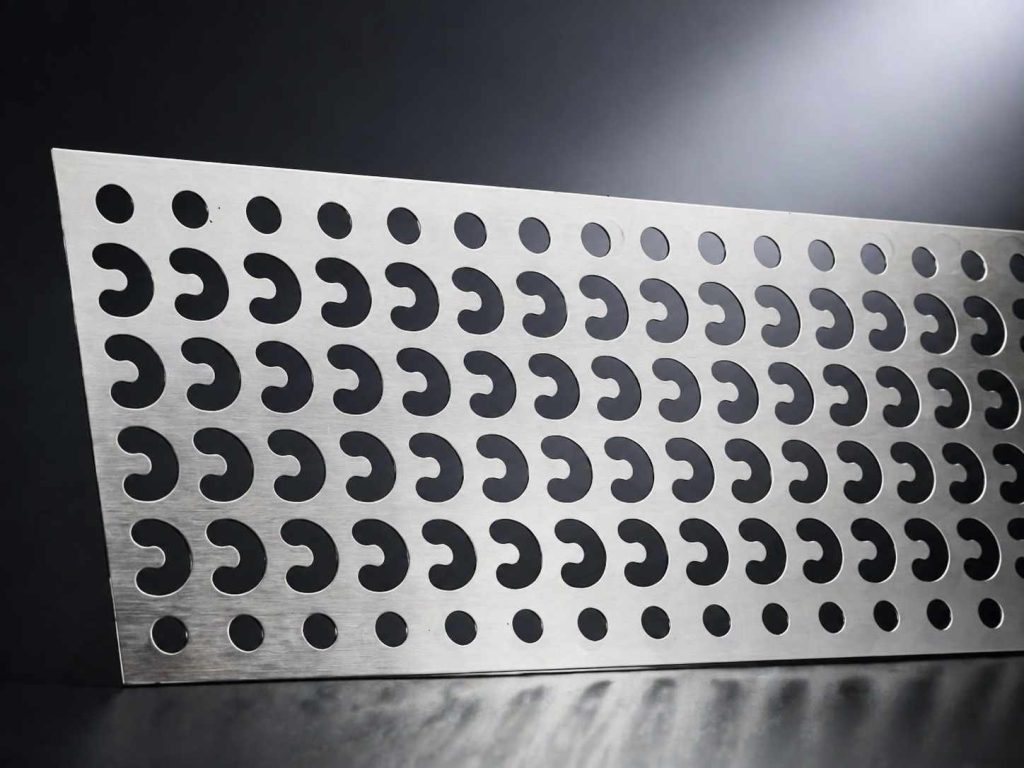
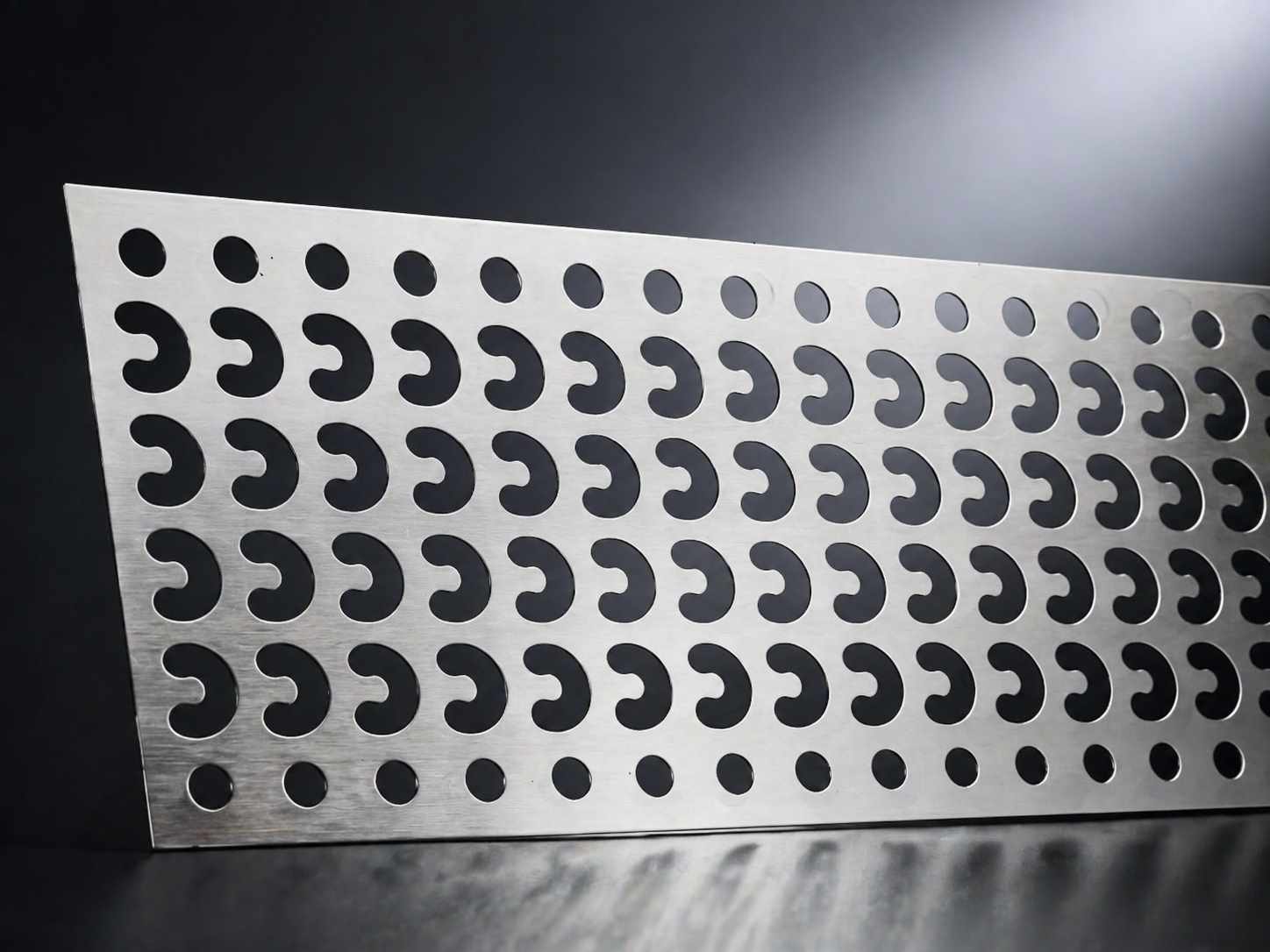
Thin gauge stainless steel strips play a pivotal role in modern manufacturing. These strips, known for their strength and flexibility, support industries like automotive, construction, and electronics. For example, the automotive sector relies on them to improve vehicle efficiency, while the electronics industry uses them for precision components such as connectors and sensors. With a projected growth rate of 6.1% annually, driven by trends like lightweighting and advancements in surgical instruments, stainless steel strips are indispensable. Their versatility and durability make them a cornerstone in countless applications worldwide.
Key Takeaways
Stainless steel strips are strong and flexible, making them essential in industries like automotive, electronics, and construction.
Understanding different grades, such as SUS304 and SUS316, helps you choose the right stainless steel strip for your specific application.
Thickness variations in stainless steel strips affect their performance, so select the appropriate gauge for your project needs.
Stainless steel strips offer excellent corrosion resistance, ensuring durability and low maintenance in demanding environments.
Choosing a reliable supplier with quality standards and good reputation is crucial for obtaining high-performance stainless steel strips.
Types of Stainless Steel Strips

Common Grades
When selecting a stainless steel strip, understanding the various grades available is crucial. Each grade offers unique properties that cater to specific applications. Here are some of the most common grades you might encounter:
SUS301: Known for its excellent ductility and strength, this grade is often used in applications requiring high tensile strength.
SUS304: This is one of the most widely used stainless steel grades. It offers good corrosion resistance and is ideal for kitchenware and food processing equipment.
SUS316: This grade provides superior corrosion resistance, especially in marine environments. It is commonly used in medical devices and chemical processing.
SUS430: A ferritic stainless steel, it is less expensive and offers good corrosion resistance, making it suitable for automotive applications and kitchen appliances.
N10 and NM13: These grades are often used in specialized applications, such as electronics and precision components.
Each grade meets specific industry standards and certifications, ensuring reliability and performance in various environments.
Thickness Variations
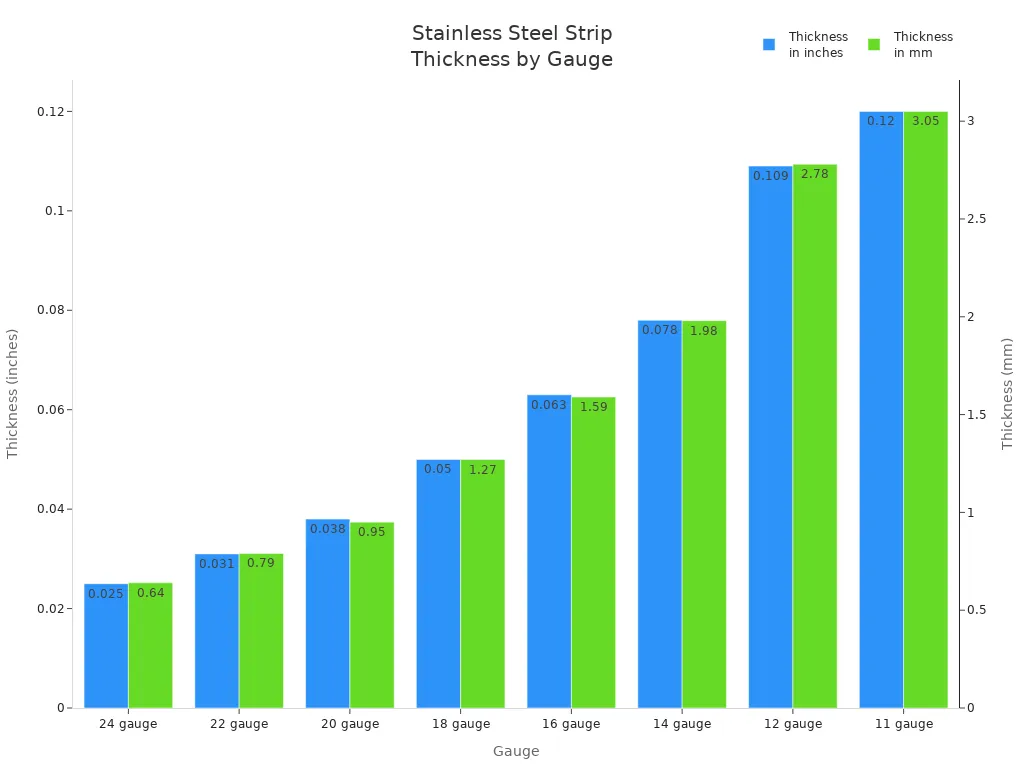
Thickness plays a significant role in the performance and application of stainless steel strips. You can find stainless steel strips in a range of thicknesses, which can affect their mechanical properties and suitability for different uses. Below is a table showcasing standard thickness ranges for various gauges:
Gauge | Thickness (inches) | Thickness (mm) |
|---|---|---|
12 gauge | 0.109″ | 2.78mm |
11 gauge | 0.120″ | 3.05mm |
24 gauge | 0.025″ | 0.64mm |
16 gauge | 0.063″ | 1.59mm |
14 gauge | 0.078″ | 1.98mm |
20 gauge | 0.038″ | 0.95mm |
18 gauge | 0.050″ | 1.27mm |
22 gauge | 0.031″ | 0.79mm |
Thickness variation impacts several factors, including:
Texture and Anisotropy: These arise from thermomechanical processing, affecting formability.
Surface Layer Characteristics: These influence fatigue and corrosion performance, critical for applications under cyclic loading.
Controlled Surface Roughness: Essential for optical and electronic applications.
Thin stainless steel strips are utilized in high-performance applications, such as in the production of mobile devices and automotive components. These applications require specific thickness and strength characteristics to meet high material demands, showcasing how thickness variation directly impacts their performance and suitability for different uses.
Understanding these grades and thickness variations will help you make informed decisions when selecting stainless steel strips for your projects.
Applications of Stainless Steel Strips
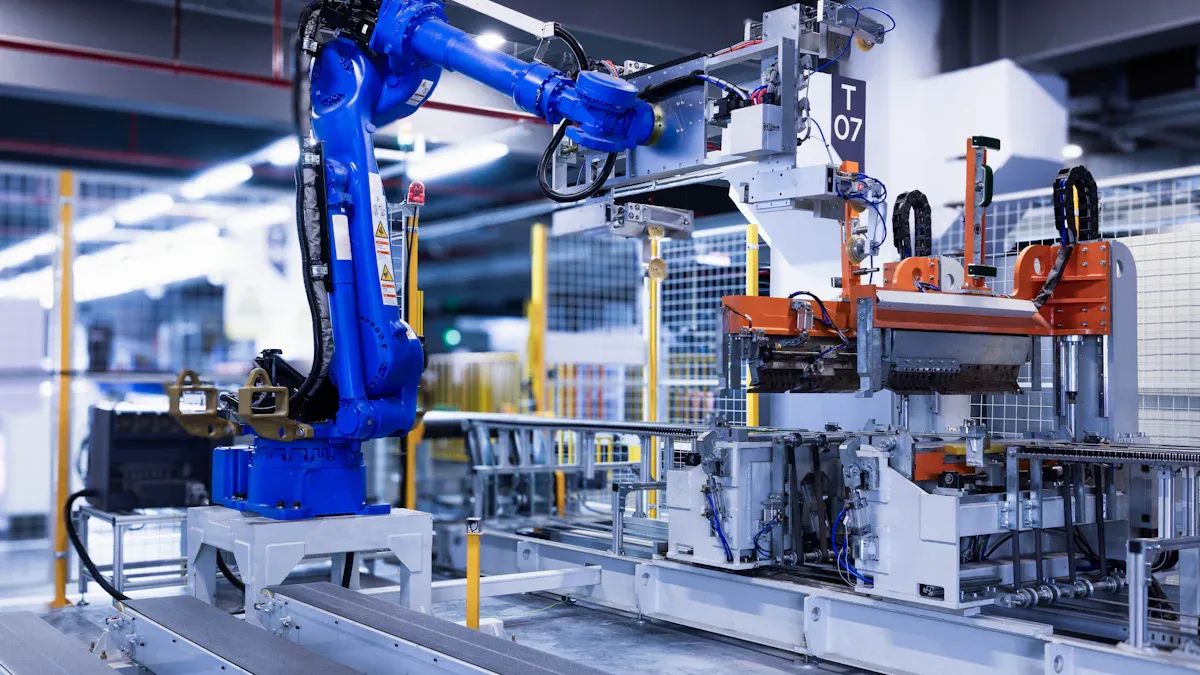
Stainless steel strips play a vital role in numerous industries, offering unmatched precision, durability, and versatility. Their unique properties make them indispensable in sectors like electronics, technology, kitchenware, and medical equipment.
Electronics and Tech
In the electronics and technology sector, stainless steel strips are essential for manufacturing precision components. These components form the backbone of various electronic devices and systems. You’ll find stainless steel strips in:
Mobile devices: Used for structural frames and connectors due to their strength and lightweight properties.
Computer accessories: Ideal for I/O connectors and high-precision springs.
Consumer electronics: Found in sensors, switches, and other intricate parts requiring high accuracy.
The material’s ability to undergo roll-to-roll continuous etching and electroplating enhances its suitability for these applications. This process ensures uniformity and precision, which are critical for the performance of electronic devices.
Tip: When selecting stainless steel strips for electronics, prioritize grades like SUS301 and SUS304. These grades offer excellent tensile strength and corrosion resistance, ensuring long-lasting performance in demanding environments.
Kitchenware and Medical Equipment
Stainless steel strips are equally valuable in kitchenware and medical equipment manufacturing. Their hygienic properties, corrosion resistance, and durability make them a preferred choice for these applications.
Key Applications in Kitchenware:
Cutlery and utensils: Stainless steel strips provide the strength and corrosion resistance needed for everyday use.
Cookware: Their ability to withstand high temperatures and resist staining makes them ideal for pots and pans.
Appliances: Used in components like handles, trims, and structural parts for refrigerators and ovens.
Key Applications in Medical Equipment:
The medical industry relies heavily on stainless steel strips for their biocompatibility and resistance to harsh sterilization processes. Below is a table highlighting their use in medical equipment:
Stainless Steel Grade | Key Properties | Applications |
|---|---|---|
304 | High corrosion resistance, good formability, strength, hygiene | Medical instruments and components |
316 | Superior corrosion resistance, enhanced strength, biocompatibility | Surgical instruments and implants |
316L | Resistance to pitting and crevice corrosion | Surgical instruments and implants |
These grades ensure that medical tools and devices maintain their integrity and performance under rigorous conditions.
Note: Stainless steel strips are also used in high-precision springs for medical devices, ensuring reliability and accuracy in critical applications.
By understanding the diverse applications of stainless steel strips, you can better appreciate their role in shaping modern industries. Whether in electronics, kitchenware, or medical equipment, these strips deliver unmatched performance and reliability.
Benefits of Stainless Steel Strips
Corrosion Resistance
One of the standout benefits of stainless steel strips is their exceptional corrosion resistance. The chromium content in stainless steel forms a protective layer that prevents rust and corrosion, making it ideal for various applications. This property is particularly advantageous in industries where exposure to moisture and chemicals is common. For instance, stainless steel strips outperform carbon steel in high-humidity environments, ensuring longevity and reliability.
Hygiene: Stainless steel is non-porous, making it resistant to bacteria and contaminants. This quality is crucial for food processing and medical applications.
Low Maintenance: Stainless steel strips require minimal upkeep, leading to lower overall costs and less downtime. Their durability means you spend less time on repairs and replacements.
Versatility
Stainless steel strips are incredibly versatile, finding applications across multiple industries. Their adaptability stems from their high strength-to-weight ratio and excellent formability. You can use them in construction, automotive, aerospace, and medical fields, among others. Here are some key areas where stainless steel strips excel:
Construction: Used for roofing, cladding, and structural applications due to their strength and corrosion resistance.
Automotive: Ideal for exhaust systems and fuel tanks, where high-temperature resistance is essential.
Medical: Preferred for surgical instruments and implants because of their biocompatibility and resistance to sterilization processes.
The ability to maintain structural integrity under extreme conditions further enhances their appeal. Stainless steel strips retain strength even at high temperatures, making them suitable for demanding environments. With proper maintenance, they can last for decades, ensuring that your investment remains sound.
Tip: When selecting stainless steel strips, consider bonysn’s offerings, which feature micron-level tolerance control and full traceability. These advantages ensure that you receive a product that meets your exact specifications and quality standards.
By understanding the benefits of stainless steel strips, you can make informed decisions that enhance the performance and longevity of your projects.
bonysn’s stainless steel band
high-precision machining
When you choose bonysn’s stainless steel band, you benefit from high-precision machining that sets the standard in the industry. This process ensures that each strip meets stringent tolerances, allowing for consistent performance across various applications. With micron-level tolerance control, you can trust that your components will fit perfectly, reducing the need for adjustments during assembly. This precision is crucial in sectors like electronics, where even the slightest deviation can impact functionality.
The surface coating is uniform
Uniform surface coating is another hallmark of bonysn’s stainless steel band. This feature enhances both aesthetics and performance. A consistent coating prevents corrosion and wear, extending the lifespan of your products. The uniformity also ensures that the strips maintain their appearance over time, which is vital for consumer-facing applications. Users have reported increased satisfaction with the durability and visual appeal of products made with bonysn’s stainless steel strips.
Tip: When selecting stainless steel strips, consider the importance of surface coating. A uniform coating can significantly enhance the longevity and reliability of your components.
Continuous roll-to-roll production
Bonysn employs a continuous roll-to-roll production method, which streamlines manufacturing and reduces waste. This technique allows for efficient processing of stainless steel strips, ensuring that you receive high-quality materials without delays. The continuous nature of this production method also means that you can order large quantities without compromising on quality. Many clients appreciate this efficiency, as it translates to faster project timelines and reduced costs.
Choosing a Reliable Supplier
Selecting a reliable supplier for stainless steel strips is crucial for ensuring the quality and performance of your projects. Here are key factors to consider when evaluating potential suppliers.
Quality Standards
Quality is a foundational requirement. You should ensure that the materials meet recognized specifications. Trustworthy suppliers will be transparent about their testing and certification processes. To ensure the quality of stainless steel strips, verify several quality standards, including:
Corrosion Resistance Tests: These tests assess the material’s ability to withstand corrosive environments, crucial for durability.
Thickness Measurement: Accurate measurement of thickness is vital for ensuring the strength and performance of the stainless steel sheets.
Certification and Compliance: Checking for certifications from recognized bodies like ASTM, ISO, and ASME ensures that the materials meet industry standards.
Additionally, confirm that the supplier provides mill test reports (MTRs) for traceability and compliance with ASTM specifications. Inquire about their internal quality assurance processes to ensure consistent product integrity.
Supplier Reputation
A supplier’s reputation can significantly impact your project’s success. Consider the following factors when assessing a supplier’s reputation:
Quality Assurance and Certifications: Look for suppliers with a strong track record of quality assurance and relevant certifications.
Customer Support and Technical Expertise: Reliable suppliers offer robust customer support and possess technical knowledge to assist you.
Sustainability and Responsible Sourcing: Evaluate whether the supplier practices responsible sourcing and sustainability, which can enhance your project’s credibility.
To further assess a supplier’s reputation, you might want to:
Review customer testimonials and case studies.
Check their history of meeting delivery timelines and handling issues.
Evaluate their financial stability and market presence.
By focusing on these criteria, you can choose a supplier that not only meets your technical requirements but also supports your project’s overall success.
Tip: Always consider the supplier’s flexibility in delivery options. A supplier that can adapt to your changing needs can be invaluable in maintaining project timelines.
In summary, understanding thin gauge stainless steel strips is essential for making informed decisions in various industries. Here are the key takeaways:
Thin gauge stainless steel strips offer exceptional durability and corrosion resistance.
Their versatility allows for applications in construction, automotive, and food processing.
Lightweight yet strong, they support modern engineering and eco-friendly designs.
As you explore further, consider how advancements in manufacturing techniques can enhance production efficiency and product quality. Staying informed about trends in sustainability and technological innovations will help you make better choices in your projects.
Tip: For more resources on stainless steel strips, check out suppliers like Gibbs Interwire and Mead Metals Inc. They provide valuable information and materials tailored to your needs.
FAQ
What are stainless steel strips used for?
Stainless steel strips serve various applications, including electronics, kitchenware, and medical equipment. Their strength, corrosion resistance, and versatility make them ideal for components like connectors, cutlery, and surgical instruments.
How do I choose the right grade of stainless steel strip?
Selecting the right grade depends on your specific application. Consider factors like corrosion resistance, strength, and formability. Common grades include SUS301 for strength and SUS304 for general use in food processing.
Can stainless steel strips be customized?
Yes, many suppliers offer customization options for stainless steel strips. You can request specific thicknesses, widths, and surface finishes to meet your project requirements.
How do I maintain stainless steel strips?
To maintain stainless steel strips, clean them regularly with mild soap and water. Avoid abrasive cleaners that can scratch the surface. Proper maintenance ensures longevity and performance.
Are stainless steel strips environmentally friendly?
Yes, stainless steel strips are recyclable and often made from recycled materials. Their durability and resistance to corrosion contribute to sustainability, making them an eco-friendly choice for various applications.
See Also
Essential Metal Coatings For Your 304 Stainless Steel Strips
Could 316 Stainless Steel Strips Revolutionize AI Cooling Technologies?
A Comprehensive Guide To Sourcing Ultra-Thin 0.009mm Steel Foil
The Role Of Precision Metal Strips In Electronics Enhancement
Improving Smart Wearables Using Pre-Plated Stainless Steel Strips