


Selective gold plating plays a crucial role in improving the performance and reliability of micro relays. By minimizing gold usage, this technique helps you reduce production costs while still meeting essential electrical performance standards. Recent industry studies show that selective gold plating not only meets these requirements but also enhances the durability of complex-shaped connectors and small electrical contacts. Additionally, incorporating Reel-to-Reel Plating Services can further optimize the plating process, ensuring consistent quality and efficiency. This balance of efficiency and effectiveness makes selective gold plating an attractive choice for modern micro relay designs.
Key Takeaways
Selective gold plating reduces material waste and production costs by applying gold only to critical areas.
Micro relays benefit from improved durability, reliability, and performance in demanding applications like aerospace and medical devices.
Reel-to-reel plating enhances efficiency and consistency in high-volume production, ensuring precise gold application and quality control.
Maintaining tight thickness tolerances during plating ensures stable contact pressure, reducing wear and extending component lifespan.
Selective plating complies with strict industry standards, guaranteeing high-quality finishes and reliable performance in critical environments.
Role of Micro Relays in Electronics
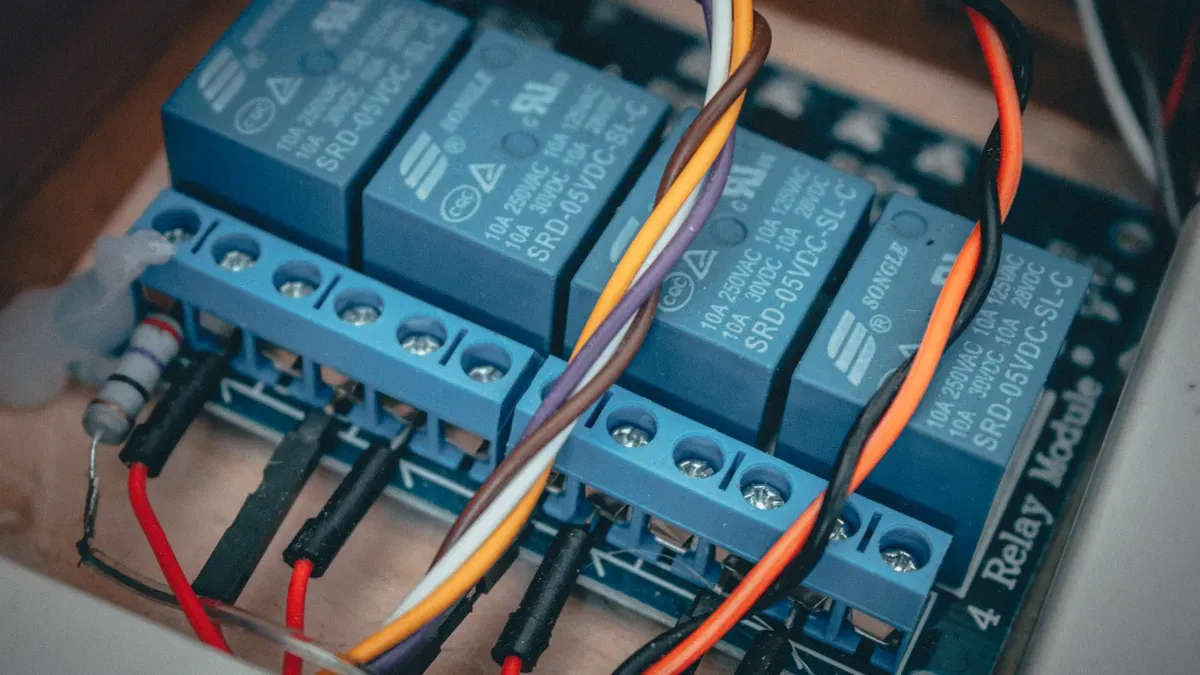
Micro relays play a vital role in modern electronics, especially in critical sectors like aerospace and medical applications. Their compact size and lightweight design make them ideal for environments where space is limited. You will find micro relays in various devices, from household appliances to advanced automotive systems.
Importance in Aerospace and Medical Applications
In aerospace, micro relays manage essential functions such as power distribution and system monitoring. Their reliability ensures that critical systems operate smoothly, which is crucial for safety. In medical devices, micro relays control functions like patient monitoring and drug delivery systems. Their precision and efficiency can significantly impact patient outcomes.
Here are some key characteristics of micro relays in these applications:
Key Characteristics | Applications |
|---|---|
Compact and Lightweight | Aerospace Systems |
Efficient and Reliable | Medical Devices |
Versatile Functions | Communication Equipment |
Performance Requirements
Micro relays must meet stringent performance requirements, especially in high-reliability environments. You should consider several factors when evaluating their performance:
Coil Resistance Measurement: High-quality relays typically exhibit an initial contact resistance of 3 to 4 milliohms. This indicates good conductive surfaces and minimal losses.
Dynamic Performance Evaluation: You can verify operation and release times using an oscilloscope to assess responsiveness and mechanical integrity.
Compliance with Standards: Micro relays must adhere to standards like IEC 61810-1, UL 507, and ISO Mini Relay Specification. These standards define performance characteristics, testing conditions, and operational life.
Micro relays also contribute to miniaturization and efficiency in electronic circuits. They enable smaller form factors and provide higher contact densities, which are crucial for efficient circuit design. Their improved thermal management capabilities enhance reliability in compact environments, making them indispensable in today’s technology-driven world.
Cost of Full-Body vs. Selective Plating
When considering the costs associated with gold plating in micro relay production, you face a choice between full-body plating and selective plating. Understanding the economic implications of each method can help you make informed decisions that align with your budget and performance needs.
Economic Implications of Traditional Methods
Full-body gold plating covers the entire surface of a component, which can lead to significant material waste. This method often results in higher costs due to the extensive use of gold. Here are some key points to consider:
Higher Material Costs: Full-body plating requires a substantial amount of gold, which can drive up production costs.
Increased Waste: You may end up using gold in areas that do not require it, leading to unnecessary expenses.
Long-Term Costs: While full-body plating might seem like a reliable option, it can lead to increased inspection and replacement costs over time. For instance, tin plating may appear cheaper initially, but it can result in premature failures, warranty claims, and downtime.
In contrast, selective gold plating minimizes these issues by applying gold only to critical areas. This targeted approach not only reduces material waste but also lowers overall costs.
Benefits of Selective Plating
Selective gold plating offers several advantages that can significantly impact your production budget and component performance:
Reduced Gold Usage: By applying gold only to essential contact points, such as socket contact tines, you can significantly lower the amount of gold used. This method can lead to cost savings of up to 28%. For example, a network equipment manufacturer successfully implemented selective gold plating for BGA areas while using less expensive materials like OSP for non-critical areas.
Improved Performance: Selective plating focuses on performance-sensitive components, ensuring that gold is used only where necessary. This approach enhances the reliability of micro relays without incurring excessive costs.
Lifecycle Cost Efficiency: While traditional methods may seem cost-effective at first glance, they can lead to higher lifecycle costs. Selective plating helps you avoid these pitfalls by extending the service life of components and reducing the need for frequent replacements.
Reel-to-Reel Plating Services for Micro Relays

Reel-to-Reel Plating Services offer a streamlined approach to plating micro relay components. This method enhances efficiency and precision, making it ideal for high-volume production. Understanding the plating process and quality assurance techniques can help you appreciate the benefits of this technology.
Overview of the Plating Process
The reel-to-reel plating process involves several key steps that ensure high-quality results. Here’s a breakdown of the process:
Surface Preparation: Components undergo precision cleaning, degreasing, and activation to ensure perfect surface readiness.
Base Layer Formation: Nickel or copper base plating is applied to promote adhesion and barrier strength.
Selective Precious Metal Application: Automated tooling applies gold, silver, or palladium finishes to targeted functional areas.
Post-Processing and Inspection: Plated parts receive stress relief, thickness verification, and corrosion resistance testing.
Final Quality Validation: Every part is reviewed through cross-sectional analysis, adhesion testing, and optical verification for compliance.
This systematic approach allows for targeted application of gold to specific areas of components. Advanced control systems manage current, voltage, and chemistry for precise specifications. Techniques like selective stripe plating and spot plating enable accurate material placement, reducing waste.
Achieving Quality and Consistency
Maintaining quality and consistency during the plating process is crucial. Manufacturers implement several quality control measures to ensure that every component meets high standards. Here are some key measures:
Quality Control Measure | Description |
|---|---|
In-Line Monitoring | Real-time systems track thickness, brightness, and process stability during plating runs. |
Final Quality Validation | Inspections under ISO 9001 ensure compliance and repeatable performance of finished products. |
Precise Thickness Control | Maintains uniform deposit thickness through calibrated chemistry and electrical parameters. |
These measures help ensure that the plating process remains consistent and reliable. For instance, advanced process controls maintain tight tolerances on plating thickness across the entire strip. Real-time monitoring ensures metal finishes meet exact specifications, even at high production speeds.
Incorporating these quality assurance techniques not only enhances the reliability of micro relays but also aligns with industry standards. As one industry expert noted, “The precision of reel-to-reel plating technology allows manufacturers to achieve high-quality finishes while minimizing material waste.” This commitment to quality ensures that your micro relay components perform optimally in demanding applications.
By leveraging Reel-to-Reel Plating Services, you can enhance the performance and reliability of micro relays while also achieving cost efficiencies.
Ensuring Thickness Tolerances
Importance of Thickness Control
Precise thickness control is critical for the performance and longevity of micro relays. When you maintain accurate thickness tolerances, you ensure stable contact pressure between relay components. This stability minimizes premature wear and degradation of electrical contacts, directly enhancing the reliability of micro relays. Over time, this precision helps your relays perform effectively, even in demanding environments. Without proper thickness control, you risk inconsistent performance, which can lead to early failures and increased maintenance costs.
In applications like aerospace and medical devices, where reliability is non-negotiable, maintaining tight tolerances becomes even more essential. By ensuring uniform plating thickness, you can achieve consistent electrical conductivity and mechanical strength. This not only extends the lifespan of your components but also reduces the likelihood of operational disruptions.
Techniques for Maintaining Tolerance
Advanced techniques and automated systems play a vital role in maintaining thickness tolerances during selective gold plating. These systems ensure precision and consistency, even in high-volume production environments. Here’s how they contribute to achieving tight tolerances:
Feature | Description |
|---|---|
In-Line Monitoring | Automated systems monitor thickness, brightness, and process stability in real time. Continuous inspection reduces variation before components move downstream. |
Tight Thickness Control | Calibrated plating systems maintain uniform deposit thickness across high-density strip layouts. |
Benefits of Selective Plating | Meets extremely tight tolerances (Cpk >2 for tolerances 10% of nominal thickness), plates multiple surfaces in one operation, increases flexibility for masking, and reduces secondary sizing processes. |
These technologies allow you to achieve exceptional precision, ensuring that the gold plating adheres to exact specifications. For example, in-line monitoring systems continuously track plating parameters, allowing for immediate adjustments if deviations occur. This reduces waste and ensures that every component meets the required standards.
By leveraging these techniques, you can enhance the quality and reliability of your micro relays. Tight tolerances not only improve performance but also reduce material usage, making selective gold plating a cost-effective solution for modern relay designs.
Compliance with Industrial Standards
Overview of Relevant Standards
When working with micro relays, you must ensure compliance with strict industrial standards to guarantee performance, reliability, and safety. These standards define the purity, hardness, and thickness of gold plating, ensuring it meets the demands of various applications. Here’s a breakdown of key classifications:
Classification | Details |
|---|---|
Type (Purity) | Type I – 99.7%, Type II – 99.0%, Type III – 99.0% |
Grade (Hardness) | Grade A – Knoop hardness ≤90 (soft gold), Grade B – 91–129 Knoop (moderate hardness), Grade C – 130–200 Knoop (hard gold), Grade D – 201 and over |
Class (Thickness) | Class 00 – 0.00002 inch (0.5 µm), Class 0 – 0.00003 inch (0.75 µm), Class 1 – 0.00005 inch (1.25 µm), Class 2 – 0.00010 inch (2.5 µm), Class 3 – 0.00020 inch (5.0 µm) |
These standards are critical for applications in aerospace, medical devices, and telecommunications. For instance, aerospace systems rely on gold plating to maintain signal integrity and resist oxidation in extreme conditions. Similarly, medical devices benefit from gold’s biocompatibility and corrosion resistance, ensuring long-term reliability.
Gold plating also offers several advantages, including excellent electrical conductivity, superior corrosion resistance, and hardness options for wear resistance. These properties make it ideal for high-performance signal paths and components that undergo repeated use.
Ensuring Compliance through Selective Plating
Selective plating processes are designed to meet these stringent standards while optimizing material usage. Each step in the process ensures that your components adhere to the required specifications. Here’s how compliance is achieved:
Step | Description |
|---|---|
1 | Application Review & Engineering Consultation: Collaborate with engineers to identify optimal plating zones and finishes. |
2 | Custom Masking & Tooling Design: Use in-house systems to isolate target areas for precise coverage. |
3 | Surface Preparation & Cleaning: Perform precision cleaning to enhance adhesion and coating consistency. |
4 | Selective Electroplating Execution: Apply metals using advanced reel-to-reel technologies. |
5 | Inspection & Quality Validation: Conduct automated thickness testing and adhesion evaluations. |
6 | Packaging & Traceability: Package components under controlled conditions with detailed process records. |
Certifications like ISO 9001:2015, AS9100, and ASTM B488 further validate compliance. These certifications ensure process efficiency, defect reduction, and traceability. Regular audits and inspections, such as XRF thickness measurement and surface vision analysis, confirm adherence to specifications.
By following these rigorous processes, selective plating not only meets industrial standards but also enhances the quality and reliability of your micro relays. This ensures that your components perform consistently in even the most demanding environments.
Selective gold plating offers significant advantages for micro relay design. It enhances performance by reducing corrosion-related degradation and maintaining stable contact resistance. You benefit from improved durability and contact integrity, ensuring reliable operation in critical applications.
Key Benefits of Selective Gold Plating
Reduces material waste and manufacturing costs.
Adheres to ISO 4527 standards, ensuring quality and compliance.
Improves conductivity, corrosion resistance, and mechanical strength.
Advantage Type | Description |
|---|---|
Performance Improvement | Maintains low contact resistance and prevents corrosion-related failures. |
Cost Reduction | Applies gold only to essential areas, minimizing material usage. |
Industry Compliance | Meets rigorous testing standards for adhesion, thickness, and surface quality. |
By leveraging selective gold plating, you can achieve cost efficiency, superior reliability, and compliance with industry standards, making it an indispensable solution for modern micro relay designs.
FAQ
What are the main advantages of selective gold plating for micro relays?
Selective gold plating reduces material waste and costs while enhancing performance. It ensures that gold is applied only where necessary, improving reliability and extending the lifespan of micro relays.
How does selective gold plating comply with industry standards?
Selective gold plating meets strict industry standards by ensuring proper thickness, purity, and hardness. This compliance guarantees that your micro relays perform reliably in demanding applications.
Can selective gold plating improve the durability of micro relays?
Yes, selective gold plating enhances durability by applying gold only to critical contact points. This targeted approach minimizes wear and corrosion, ensuring long-lasting performance in various environments.
What industries benefit most from micro relays with selective gold plating?
Industries such as aerospace, medical devices, and telecommunications benefit significantly. These sectors require reliable, high-performance components that can withstand harsh conditions and maintain operational integrity.
How does reel-to-reel plating enhance the production process?
Reel-to-reel plating streamlines the production process by automating the application of gold. This method improves efficiency, consistency, and quality, making it ideal for high-volume manufacturing of micro relays.
See Also
Achieving Cost Efficiency Through Selective Reel Plating Techniques
Reducing Gold Plating Expenses in I/O Interfaces Using Mold-Free Methods
Continuous Moldless Selective Plating for Gold Coating on Thin Strips
Innovative Mold-Free Selective Plating Solutions for AI Chip Production
Advancing Prototyping Speed with Die-Free Selective Plating Innovations