
Roll-to-Roll Continuous Etching revolutionizes modern manufacturing by enhancing efficiency and reducing costs. This innovative method automates high-precision processing of flexible rolled materials, such as stainless steel and titanium copper alloy for EV battery applications. Unlike traditional etching, which can be slow and manual, roll-to-roll operates continuously, minimizing interruptions and handling errors. This leads to a significant boost in production rates and a decrease in material waste. As industries strive for sustainability, this technology emerges as a key player in achieving eco-friendly practices while maintaining high-quality standards.
Key Takeaways
Roll-to-roll etching boosts production rates significantly, achieving speeds of 1 to 5 meters per minute, which can lead to daily outputs of up to 10,000 square meters.
This technology reduces material waste by eliminating inefficiencies found in traditional etching methods, making it a more sustainable choice for manufacturing.
Precision roll-to-roll etching ensures consistent quality with an accuracy of ±0.005mm, leading to fewer defects and higher customer satisfaction.
The flexibility of roll-to-roll etching allows for the use of various materials, enabling customization to meet specific industry needs.
Adopting roll-to-roll technology can streamline operations, reduce costs, and enhance responsiveness to market demands, positioning businesses for future success.
Cost Efficiency in Roll-to-Roll Etching
High Production Rates
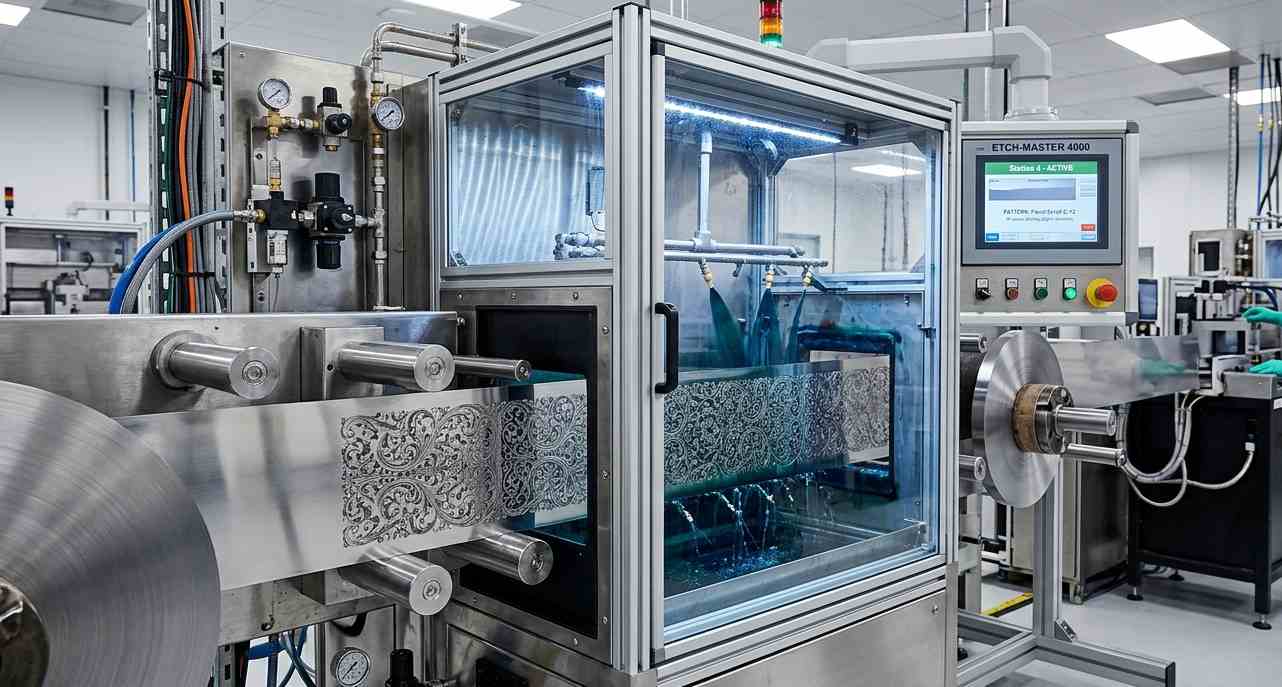
Roll-to-roll etching significantly enhances production rates compared to traditional batch processing methods. This continuous processing approach allows you to achieve speeds of 1 to 5 meters per minute, resulting in a daily production capacity of up to 10,000 square meters. In contrast, batch processing often operates at slower speeds, leading to lower output. The following table illustrates the stark differences in processing speed and production capacity:
Method | Processing Speed (m/min) | Production Capacity (sq. meters/day) | Cost Reduction (%) |
|---|---|---|---|
Roll-to-Roll Continuous Etching | 1-5 | 10,000 | 25-35 |
Batch Processing | Slower | Lower than 10,000 | Not specified |
By adopting roll-to-roll etching, you can leverage economies of scale. Higher throughput translates to lower unit costs, making your manufacturing process more cost-effective. Additionally, the automation inherent in roll-to-roll systems reduces labor costs, allowing you to allocate resources more efficiently.
Reduced Waste Generation
One of the standout benefits of roll-to-roll etching is its ability to minimize waste generation. Traditional etching methods often involve significant material loss due to the need for mold opening and other manual processes. With roll-to-roll technology, you eliminate these inefficiencies, leading to a substantial reduction of waste.
The following table summarizes key points regarding cost savings through economies of scale in roll-to-roll etching:
Evidence Point | Description |
|---|---|
Higher Throughput | R2R manufacturing enables the production of circuits at much higher rates compared to traditional methods, leading to lower unit costs. |
Reduced Labor Costs | The automation in R2R processes decreases the need for manual labor, further cutting costs in high-volume production. |
Smaller Factory Footprint | R2R allows for a more compact manufacturing setup, which can lead to savings in real estate and operational costs. |
Proximity to Markets | By locating manufacturing closer to the end market, shipping distances are minimized, enhancing supply chain efficiency. |
By embracing roll-to-roll etching, you not only enhance your production capabilities but also contribute to a more sustainable manufacturing process. The reduction of waste aligns with modern industry standards focused on eco-friendly practices, making roll-to-roll a smart choice for cost-effective manufacturing.
Precision Roll-to-Roll Etching Benefits
Consistent Quality
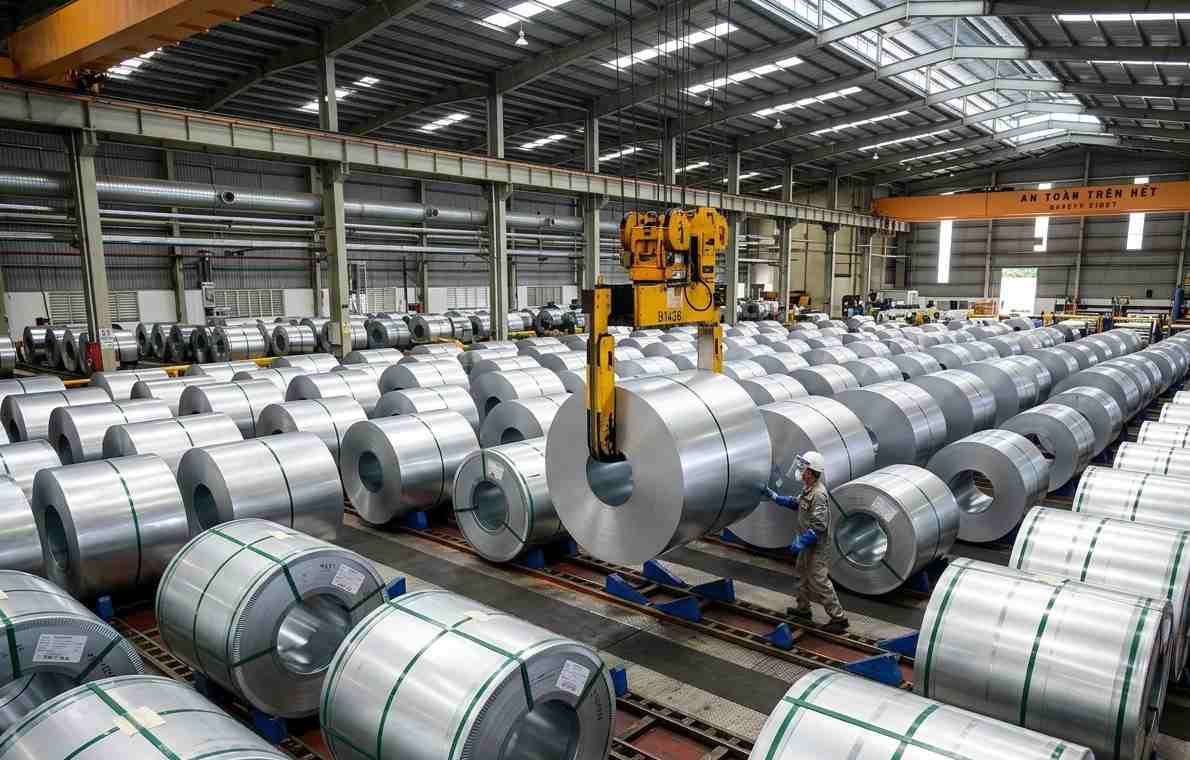
You can expect consistent quality when utilizing precision roll-to-roll etching. This technology ensures that every product meets stringent standards, which is crucial in high-volume production. The following factors contribute to this consistency:
The GTT engraving technology enhances ink-to-plate transfer consistency.
A constant beam laser and Open Slalom Ink Channel geometry improve ink flow accuracy.
A dual calibrated quality control system with Troika AniCAM 3D microscopes ensures ongoing monitoring of anilox roll quality.
These advancements lead to fewer defects and higher reliability in your products. When you prioritize quality, you enhance customer satisfaction and reduce costs associated with rework and waste.
Advanced Technology Integration
Precision roll-to-roll etching achieves remarkable accuracy, with a precision of ±0.005mm. This level of precision significantly impacts manufacturing outcomes. Here’s how:
Micron-grade filter mesh processing ensures continuous mass production without deformation.
Uniform pore sizes and no burrs lead to high-quality outputs.
Stress-free and warp-free production enhances product reliability.
High throughput and low costs are achieved due to the elimination of individual sheet clamping.
Products are lightweight, thin, and permeable, which is essential for precise filtration.
High-temperature and corrosion resistance make these products suitable for demanding applications.
By integrating advanced technologies, you can streamline your production processes while maintaining high precision. This not only improves product quality but also positions your business as a leader in innovation.
Flexibility with Materials

Diverse Material Options
Roll-to-roll converting offers remarkable versatility in material selection. You can utilize various substrates, including polymers, advanced nanofibers, and even specialized materials like titanium copper alloy for EV battery applications. This flexibility allows you to tailor your production to meet specific industry demands. Here are some key aspects of how roll-to-roll converting accommodates different materials:
Continuous techniques enable efficient material deposition on moving substrates.
Established methods such as tape casting and reel-to-reel vacuum deposition enhance adaptability.
The technology supports the production of multilayer technologies at competitive costs.
This adaptability makes roll-to-roll etching an ideal choice for industries ranging from micro-electronics to energy-related technologies.
Customization Capabilities
Customization is a significant advantage of roll-to-roll continuous etching. You can adjust various aspects of the process to meet your specific needs. The following table outlines the customization capabilities available:
Customization Aspect | Details |
|---|---|
Substrate Material | Various materials can be used for etching, allowing flexibility based on customer needs. |
Thickness | The thickness of the substrate can be adjusted according to specifications. |
Pattern Design | Custom patterns can be designed to meet specific requirements. |
Processing Speed | The speed of the etching process can be tailored to enhance efficiency. |
Photomask Replacement | Short cycle time (2-4 hours) for photomask replacement enables quick adjustments. |
Scalability | Production lines can be expanded based on the scale of production required. |
With these customization options, you can optimize your production processes and ensure that your products meet the highest standards. The flexibility in materials and customization capabilities positions roll-to-roll continuous etching as a game changer in modern manufacturing.
Sustainability in Roll-to-Roll Processes
Eco-Friendly Practices
Roll-to-roll etching stands out for its commitment to eco-friendly practices. This innovative process eliminates harmful chemicals, making it a safer alternative to traditional etching methods. Here are some key eco-friendly practices associated with roll-to-roll processing:
Eco-Friendly Practice | Description |
|---|---|
No chemicals required | DPP technology is entirely mechanical, eliminating the need for harmful chemicals used in traditional etching. |
Reduced water consumption | DPP does not require water for operation, significantly lowering freshwater usage in production. |
Recyclable scrap | The only waste produced is clean metal flakes, which can be fully recycled, unlike the waste from wet etching. |
Less energy intensive | The process avoids energy consumption from post-curing, as it does not involve heat-based materials. |
Simple supply chains | Fewer consumables lead to simpler logistics, reducing carbon emissions associated with transport. |
These practices not only enhance sustainability but also align with industry standards focused on reducing environmental impact.
Efficient Resource Use
Efficient resource use is another hallmark of roll-to-roll processing. This method minimizes material waste and optimizes production efficiency. Here’s how roll-to-roll etching compares to traditional methods:
Roll-to-roll methods are recognized for their cost efficiency in mass production of flexible circuits.
Traditional subtractive etching involves removing unwanted copper from a laminate, leading to significant material loss.
The additive process in roll-to-roll aims to minimize waste by depositing copper only where needed.
By adopting roll-to-roll etching, you contribute to a more sustainable manufacturing environment. The technology allows for high-volume production with efficiency, leading to lower energy consumption. This not only benefits your bottom line but also supports global efforts to create a greener future.
Embracing roll-to-roll processing means you prioritize sustainability while maintaining high-quality production standards.
Rapid Turnaround Times

Streamlined Operations
Roll-to-roll continuous etching significantly streamlines operations, enhancing production efficiency. This method allows for continuous substrate feeding, which increases production speed. You can expect to see the following operational strategies that contribute to faster production:
Strategy | Description |
|---|---|
Workflow Optimization | Streamlining production sequences minimizes idle time and implements lean principles to enhance efficiency. |
Digital Monitoring and Quality Control | Utilizing machine vision and real-time analytics detects defects early, reducing waste and ensuring consistent quality. |
Supply Chain Management | Implementing just-in-time systems and strategic supplier relationships reduces costs and improves inventory management. |
These strategies not only boost efficiency but also reduce costs, allowing you to respond quickly to market demands.
Quick Prototyping
Quick prototyping is another significant advantage of roll-to-roll continuous etching. This technology enables you to produce functional prototypes rapidly, which enhances your development processes. The following benefits illustrate how quick sample production impacts product development cycles:
Benefit | Description |
|---|---|
Roll-to-roll continuous etching allows for continuous substrate feeding, enhancing throughput. | |
Enhanced Efficiency | Integration of multiple process steps in a continuous line improves overall production efficiency. |
Faster production enables manufacturers to meet market demands swiftly and reduce time-to-market. |
With the ability to develop functional microfluidic prototype devices, you can address challenges in scaling up from lab to mass manufacturing. This capability represents a significant advancement in high-volume prototyping and manufacturing. By adopting roll-to-roll technology, you position your business to respond swiftly to changing market conditions, ensuring you stay ahead of the competition.
Bonysn Roll-to-Roll Etching Capabilities
±0.03mm Dimensional Accuracy (No Pre-punching Required)
Bonysn’s roll-to-roll etching technology achieves an impressive dimensional accuracy of ±0.03mm without the need for pre-punching. This precision allows you to create intricate designs with confidence. The elimination of pre-punching not only streamlines the production process but also reduces setup times. You can expect consistent results across large batches, ensuring that your products meet the highest standards of quality.
Integration with Subsequent Electroplating and Stamping Processes
The Bonysn roll-to-roll etching process seamlessly integrates with subsequent electroplating and stamping processes. This integration offers several advantages:
High-quality, uniform substrates are essential for effective electroplating and stamping.
Continuous production capabilities allow for smooth transitions to cleaning and electroplating, enhancing yield rates.
This integration meets the high-volume demands of industries like 3C electronics, ensuring efficient automated production.
By utilizing Bonysn’s technology, you can optimize your workflow and enhance overall production efficiency.
High-volume Production with Consistent Quality
Bonysn’s roll-to-roll etching technology excels in high-volume production while maintaining consistent quality. The system operates continuously at processing speeds of 1-5m/min, significantly faster than traditional methods. Key benefits include:
High precision with an etching tolerance of ±0.005mm.
Uniform processing quality through even distribution of the etching solution.
Designed for mass production, particularly in industries like semiconductors and flexible electronics.
This capability ensures that you can meet market demands without compromising on quality. With Bonysn’s roll-to-roll etching, you can confidently scale your production while delivering reliable products.
Roll-to-Roll Continuous Etching stands as a transformative technology in the manufacturing industry. It offers numerous benefits that enhance production efficiency and sustainability. Here’s a summary of the key advantages:
Benefit | Description |
|---|---|
High Precision | Enables intricate designs and patterns with remarkable accuracy, beneficial for various industries. |
Cost-Effective Production | Achieves economies of scale, reducing waste and lowering production costs. |
Flexibility in Materials | Compatible with a wide range of materials, allowing for customized solutions without quality loss. |
Sustainability | Eco-friendly alternative with efficient material usage and waste reduction. |
Rapid Turnaround Times | Shortens lead times, helping businesses respond quickly to market demands. |
By choosing Bonysn’s roll-to-roll etching technology, you address critical pain points in your production processes. This technology not only meets the demands of modern manufacturing but also positions you for future advancements in efficiency and sustainability.
FAQ
What is Roll-to-Roll Continuous Etching?
Roll-to-Roll Continuous Etching is a manufacturing process that etches materials on a continuous roll. This method enhances efficiency, reduces waste, and allows for high-precision production of flexible materials.
What materials can be used in this process?
You can use various materials, including stainless steel, copper alloys, and polymers. This versatility makes roll-to-roll etching suitable for multiple industries, such as electronics and automotive.
How does this technology improve sustainability?
Roll-to-roll etching minimizes waste and eliminates harmful chemicals. It also reduces energy consumption, making it an eco-friendly alternative to traditional etching methods.
What are the typical production speeds?
Production speeds for roll-to-roll etching range from 1 to 5 meters per minute. This continuous operation significantly increases daily output compared to traditional batch processing.
How does Bonysn ensure quality in its etching process?
Bonysn employs advanced technology, achieving precision of ±0.03mm. Continuous monitoring and quality control systems ensure consistent product quality throughout the production process.
See Also
Exploring Roll-to-Roll Etching Benefits for Future Electronics
Innovative Roll-to-Roll Etching Revolutionizing Battery Manufacturing
Vietnam’s Roll-to-Roll Metal Etching Enhancing OEM Production Lines
KSA’s Roll-to-Roll Metal Etching Advancing Sensor Technologies
Achieving ±0.005mm Precision Metal Etching for Semiconductors