
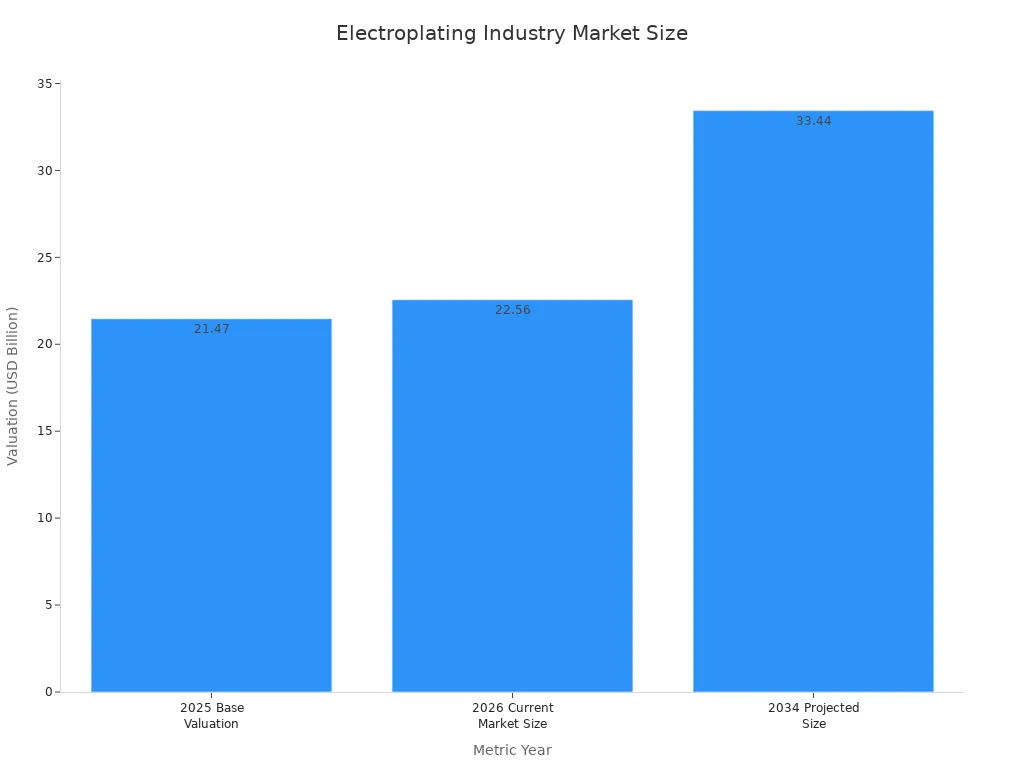
Electroplating is a key way to finish surfaces. It makes materials much better. It helps them work well in many industries. Electroplating is very important in making things today. This method is growing all the time. It grows about 4% to 6% each year. The world market for electroplating shows this growth.
Metric Year | Industry Valuation |
|---|---|
2025 Base Valuation | USD 21.47 Billion |
2026 Current Market Size | USD 22.56 Billion |
2034 Projected Size | USD 33.44 Billion |
This blog looks at how electroplating is used. It shows its good points. It also shares ways to make it more popular. The Electroplating Process gives important answers for different businesses.
Key Takeaways
Electroplating uses power. It covers parts with a metal layer. This layer protects them.
Plating makes things stronger. It stops rust. It helps electricity flow better.
Big industries use electroplating. These include cars, electronics, and health care. They use it every day.
New factories use good methods. They use smart robots. This makes electroplating better.
The Electroplating Process Explained
What is Electroplating?
Electroplating is a basic way to finish surfaces. You use electricity. It puts a thin layer of metal. This goes onto a surface that conducts power. This process is also called electrodeposition. It changes how an object’s surface acts. It makes parts stronger. It makes them look nicer. Or it helps them carry electricity better.
Electroplating uses electricity. It has two metal pieces in a liquid. This liquid is called an electrolyte solution. The electricity makes metal dissolve from one piece. This is called the anode. Then, the metal forms a thin layer. This happens on the other piece. This is called the cathode.
This table shows the basic science behind the electroplating process:
Electrochemical Principle / Component | Operational Role & Mechanism |
|---|---|
Electrolysis | It breaks down the liquid. It uses an electric current. |
Anode (Oxidation) | The source metal loses electrons. It makes charged particles. These go into the liquid. |
Cathode (Reduction) | The target object gets electrons. Metal particles turn into solid metal. They form a thin layer. |
Electrolyte Solution | It has dissolved metal particles. These move from the anode to the cathode. |
Direct Current (DC) Power | It provides the electricity. This makes the chemical reactions happen. |
Key Steps in the Process
The electroplating process has important steps. You must get the surface ready. This helps the metal stick well.
Pre-treatment and Surface Preparation
Cleaning and Degreasing: You use special liquids. They remove oil and dirt. They clean unwanted stuff from parts.
Etching and Activation: You use acids or other liquids. They clean off rust. They make the surface a little rough. This helps the metal stick better.
Rinsing: You wash the parts. You use clean water. This removes any leftover chemicals.
Plating Operation
Electrolyte Bath Preparation: You put the parts into a liquid. This liquid has dissolved metal salts. It also has other chemicals.
Current and Voltage Application: You use direct current. This pushes metal particles. They go toward your parts. Your parts act as the cathode.
Deposition Phase: Metal particles become solid metal. They form a coating on your parts.
Post-Treatment Processes
Rinsing and Drying: You wash away any liquid. Then you dry the parts.
Sealing and Passivation: You might add more treatments. These make parts last longer. They help parts resist rust.
Inspection and Quality Control: You check the thickness. You check how well the coating sticks. This makes sure parts meet standards. This is key for good electroplated products.
Essential Components and Functions
Each part of the electroplating system has a job. All parts are needed for good electroplating.
Component | Function / Role in Electroplating |
|---|---|
Anode | It is the positive part. It dissolves into the liquid. It releases metal particles for plating. |
Cathode | It is the negative part. It is the object getting the metal layer. |
Electrolyte Solution | It has dissolved metal particles. It helps electricity flow. It moves metal onto the cathode surface. |
Power Source (DC) | It gives direct current. It controls the voltage. This makes the chemical reaction happen steadily. |
Anode: This is where the metal comes from. It is the metal you want to plate. For example, it could be a gold bar. It dissolves to release metal particles.
Cathode: This is the item you are plating. It could be jewelry. It could be a machine part. Metal particles stick here. This makes it look better. It helps it resist rust.
Common Electroplating Metals
Many metals are used in electroplating. Each metal has special benefits. Choosing the right metal is important. This is true when making new parts.
Plating Metal | Primary Property / Benefit | Target Applications & Industries |
|---|---|---|
Silver | It conducts electricity very well. | It is used in electrical parts. It is in switches. It is in connectors. This is for phones and electronics. |
Copper | It conducts electricity very well. | It is used in circuit boards. It is in many electronic parts. |
Nickel | It stops rust. It reduces stress. | It is used in airplane parts. |
Chrome | It is shiny. It stops rust. | It is used for shiny parts. It protects car parts. |
Medical: You use titanium, gold, and silver. These are for new joints. They are for implants. These metals resist wear. They resist rust.
Automotive: Zinc-nickel coatings stop rust. Nickel plating goes on car parts. It goes on plastic parts.
Aerospace: Titanium is strong. Copper helps with heat. Nickel protects parts from wear and rust.
Oil & Gas: Nickel electroplating protects pipes. It works in tough places.
Electronics: Gold and copper help chips work better. They help connectors carry electricity. Palladium mixes protect these parts.
Jewelry Production: You plate valuable metals. These are gold, silver, and rhodium. They go over cheaper metals. This makes jewelry look better. It makes it worth more. It stops it from getting dull.
Benefits of Electroplating for Industry
Electroplating helps many industries. It makes products work better. It makes them last longer. This method solves many problems.
Corrosion Resistance and Durability
Corrosion harms metal parts. It makes them weak. It makes them wear out fast. Electroplating builds a strong shield. This shield stops rust. It stops other damage.
Electroplating uses electricity. You put parts in a liquid. This liquid has metal in it. Electricity moves metal bits. They go from one metal piece to your parts.
This is how it protects your parts:
Dissolution at the Anode: Electricity makes metal bits leave the source metal. This metal is the anode. These bits go into the liquid.
Ion Migration: These charged metal bits move through the liquid. They go to your parts. Your parts are the cathode.
Bonding and Layer Formation: The bits stick to your parts. They make a metal layer.
Barrier Protection: This new metal layer is like a wall. It keeps your parts safe. It stops corrosion.
This coating takes hits. It stops parts from breaking. This makes your products much stronger.
Many electroplated coatings make materials last longer. Look at these examples:
Coating Material | Durability Enhancements | Key Applications |
|---|---|---|
Gold Plating | Stops tarnish. It does not rust. This makes things reliable for a long time. | Electronics (connectors, circuit boards) |
Nickel Plating | Makes things very hard. It resists wear. It also stops rust well. | Automotive parts, industrial machinery components |
Chrome / Hard Chrome Plating | Makes surfaces very hard. It has low rub. It resists wear, rub, and scraping very well. | Hydraulic cylinders, industrial molds, machinery tooling |
Rhodium Plating | Makes a very strong layer. It resists tarnish. It protects against daily use. | High-end silver jewelry, reflective components |
Surface Hardness and Wear Resistance
Your industrial parts work hard. They often rub together. This causes wear. Electroplating makes surfaces much harder. This helps them resist wear.
Hard chrome plating is a good example. It makes metal items much harder. It puts a special layer of chromium. This goes right onto your parts. This coating makes surfaces stronger. It helps them resist wear. It also makes them harder. This is key for tough industrial jobs.
A hard chrome coating can be very hard. It can reach 68 to 72 HRc.
This table shows how plating makes things harder:
Plating Material Type | Vickers Hardness (HV) | Rockwell Hardness (HRc) |
|---|---|---|
Bright Electroplated Nickel | 300 HV | 33 HRc |
Hard Chrome / Electroplated Chromium | 940–1210 HV | 65–70 HRc |
Electroplated surfaces resist wear well. They are better than plain materials.
Stops Material Breakdown: Plain metals wear fast from rubbing and rust. Electroplating adds a shield. This makes surfaces much harder.
Reduces Rubbing and Sticking: The treated surface rubs less. It stops parts from sticking.
Makes Parts Last Longer: Electroplated layers keep parts strong. They resist damage. This is true even in bad conditions and high heat. This stops them from breaking early.
Electrical Conductivity Enhancement
Many new devices need good electricity flow. Electroplating can make parts conduct electricity better. This is very important for electronics. It helps other high-tech uses.
Electroplating makes things conduct better in a few ways:
Mechanism | Description | Effect on Conductivity |
|---|---|---|
Oxide Prevention | It uses metals that stop rust. This stops bad oxides from forming. | It keeps electricity flowing. It helps contacts work. |
Resistance Reduction | It covers base metals. It uses coatings that conduct well. This protects them. | It lowers electrical resistance. It makes things work better. |
Surface Smoothing | It makes a smooth surface. This reduces tiny bumps. | It lowers contact resistance. It limits signal problems. |
Better electrical conductivity from electroplating is very important.
It is key for complex electrical parts. This includes medical, car, plane, army, and RF/Microwave parts.
The Tri-M3 Surface Finish is special. It uses copper, tin, and zinc. You put it on hardware, medical, and electronic devices. It makes sure electricity flows well.
Here are examples of electroplated materials and their uses:
Electroplated Material | Critical Application / Component | Industry / Function |
|---|---|---|
Gold, Silver, Copper | Circuit boards and electrical connectors | Electronics (makes electricity flow well) |
Gold | Connectors and electrical contacts | Electronics (conducts best and stops rust) |
Silver | Various electrical components | General Electronics (conducts very well) |
Aesthetic Appeal and Decorative Finishes
Electroplating does more than protect. It also makes products look good. You can give parts a nice finish. This adds value. It makes them look better. This is key for things people buy. It is also for decorations. The right metal plating can change how products look. This makes them more attractive.
Here are some popular decorative electroplating finishes:
Finish Type | Aesthetic Characteristics |
|---|---|
Gold | Looks bright and shiny. It resists tarnish. |
Silver | Looks very charming and beautiful. |
Chrome | Looks brilliant, polished, and shiny like a mirror. |
Copper | Works as a nice base layer. It makes the whole look better. |
You can also pick modern finishes:
Finish Type | Aesthetic Characteristics |
|---|---|
Black Chrome | Looks sleek, modern, and fancy. |
Satin Nickel | Looks soft, fancy, and modern with a brushed look. |
Cost-Effectiveness and Material Conservation
Electroplating is a smart choice for money. It helps you save cash. It also uses materials wisely. This makes it a good value for many industries.
Electroplating often costs less to start. This is compared to other methods.
Cost Metric | Electroplating | Cold Spray Coating |
|---|---|---|
Capital Investment Range | $50,000 – $500,000 | $200,000 – $1,000,000 |
Titanium Implant Initial Production Cost | 15% lower | Baseline comparison |
Here are more ways electroplating saves money:
Lower Material Costs: It makes surfaces thicker. It does this without using much solid material. This means you use less raw material.
Better Product Quality & Durability: It makes parts resist rust better. It makes them last longer. This greatly cuts costs for fixes, new parts, and returns.
Affordable Decorative Finishing: You can put a thin layer of costly metals. Like gold. You put it over cheaper metals. This is a cheaper way to get a fancy look.
Cost-Effective Functionality: It gives parts important jobs. Like conducting electricity. It uses cheap metals like copper.
Reduced Coating Expenses: It gives a good base coat. This helps topcoats stick better. You do not need many paint layers.
Industrial Applications of Electroplating
Electroplating has many good points. You can see them in many industries. This process makes things work better. It also makes them look good. It makes products better. It makes them last longer. These electroplating uses are very important. They help make things today.
Automotive Sector Applications
The car industry uses a lot of electroplating. It makes cars safer. It makes them look nicer. It also makes them last longer. Electroplating protects many car parts. It makes them work better.
Automotive Category | Electroplated Components | Functional & Aesthetic Purpose |
|---|---|---|
Exterior Parts | Bumpers, Grilles, Emblems, Badges, Wheel Rims | It adds chrome or nickel coatings. These make parts shiny. They look good. They stop rust. |
Interior Parts | Door Handles, Dashboard Elements, Trim Accents, Instrument Panels | It makes them look shiny. It adds a nice finish. It helps them resist wear. This is for parts you touch often. |
Functional Parts | Fasteners, Bolts, Brake Parts, Exhaust Tips, Electrical Contacts | It makes parts last longer. It stops rust. It helps electricity flow. It uses gold or silver plating. |
Engine Components | Valve Covers, Intake Manifolds | It helps them resist heat. It protects against wear. It stops rust on the surface. |
You will find certain kinds of metal plating. They are used for different car parts.
Nickel Plating: This is for important engine parts. These include engine valves, gears, and main engine parts. It makes them very hard. It protects against wear. It stops rust.
Chrome Plating: You put this on parts that wear a lot. These are piston rings, shock absorber rods, and brake cylinders. You also use it on outside parts. These are bumpers and grille trims. It makes them last. It makes them shiny like a mirror.
Zinc & Zinc–Nickel Plating: This mainly protects fasteners, brackets, bolts, and undercarriage parts. It protects them from bad weather.
Copper & Gold Plating: You put this on electrical connectors. It goes on battery terminals, circuits, and sensors. It makes electricity flow better. It stops rust.
These electroplating uses make your car parts work well. They also make them look good for a long time.
Electronics Industry Uses
The electronics industry needs electroplating. It makes small, complex parts work well. This process is key for many electronic parts.
Electroplating Method | Target Application | Key Characteristics & Benefits |
|---|---|---|
Gold Tab Electroplating | Printed Circuit Boards (PCBs) | It puts on a strong gold-nickel mix. This makes the surface harder. It stays flexible. It also stops rust. |
Through-Hole Electroplating | Plated components routed through PCBs | It protects inside board connections. It uses gold-nickel mixes. These stop rust. They protect against damage. |
You will find different metal plating types in electronics.
Copper Plating: This is used a lot in making circuits and chips. It lets heat and electricity pass well. It costs little. It also stops rust. It works as a base layer.
Palladium & Palladium Alloy Plating: You put this on connectors. It goes on lead frames in electronics. It is light. It costs less than gold. It keeps electricity flowing well.
Rhodium Plating: This is used on sliding electrical contacts. These contacts often handle high power. It makes the surface wear less. It stops rust.
Tin & Tin-Lead Alloy Plating: This helps electrical connections stick well. It also lowers the risk of thin metal hairs.
Electroplating is very important. It helps make electroplated products in electronics. It helps make new designs. It makes sure all electronic parts work right.
Medical Device Coatings
Electroplating is very important for medical devices. It makes them safe for the body. It makes them work well. These coatings make devices safe to use inside people. They also make them last longer.
Coating Material | Key Properties & Benefits | Medical Device Applications |
|---|---|---|
Gold | It is safe for the body. It conducts electricity well. It stops rust. | Electrical connectors, pacemakers, heart stents, dental crowns |
Silver | It conducts electricity and heat. It naturally kills germs. | General medical device plating that needs to be clean. |
Copper | It conducts electricity and heat well. It kills germs. | Parts of medical devices that conduct electricity. |
Tin | It is not harmful. It costs little. It stops rust. | It is a top coat. It goes over lead or tungsten shields. This is in X-ray units. |
Nickel (and Sulfamate Nickel) | It stops rust. It is very pure (sulfamate). It is harder and even (electroless). | It is a base coat for gold or silver contacts. It is a hard outer coat. |
Platinum | It is safe for the body. It is very hard. It stops rust very well. | Pacemakers, catheters, equipment connectors, surgical implants |
Diamond-Like Carbon (DLC) | It is very hard. It is tough. It is safe for the body. | Special medical devices and implants. |
Titanium Nitride (TiN) | It is like ceramic. It is very strong. It is very hard. It is safe for the body. | Joint implants (like knee and hip replacements). |
Graphite-Like Carbon (GLC) | It is very strong. It is very flexible. It lasts a very long time. | Hip joint implants that last a long time. |
Tantalum (Ta) | It is very flexible. It is strong. It is very safe for the body. It wears little. | Advanced bone and medical implants. |
These special coatings are key for medical parts. They keep patients safe. They make devices work well. You can see how electroplating helps make new medical tools.
Aerospace and Defense Applications
The aerospace and defense industries need high performance. Electroplating treats surfaces for their parts. These treatments make them reliable. This is true in tough conditions.
Plating Technique | High-Performance Applications | Primary Benefits |
|---|---|---|
Nickel Electroplating | Landing gear, turbine blades | It protects parts from rust. It stops surface damage. |
Cadmium Plating | Fasteners, electrical connectors | It stops a type of rust called galvanic corrosion. |
Hard Chrome Plating | Hydraulic systems | It makes parts resist wear. It lowers rubbing. This is true under heavy loads. |
Electroless Nickel Plating | Complex geometric components | It makes a coat that is even. It makes parts stronger. It makes them last longer. |
Composite Coatings (Nickel-PTFE) | Moving mechanical parts | It makes things very slippery. It lowers rubbing and wear. |
You will find special metal plating solutions. These are for tough places.
Zinc–Nickel Coatings: This acts as a shield. It protects against bad rust in the air. This is for parts under stress. It can last up to 500 hours in salt spray. This is for white rust. It can last 1,000 hours for red rust.
Cadmium Coatings: This protects important aluminum and steel parts. These include airplane engines, landing gear, bolts, and main plane parts. It stops surface damage.
Pre-Braze Nickel Electrodeposition: You put this on during making. It helps surfaces get wet well. This is before high-heat joining of turbine blades, frames, vanes, and stators.
Electroplating makes many types of parts better in these areas.
Structural & Mechanical Parts: It makes landing gear fasteners, engine parts, brackets, and plane structures more reliable.
Space & Propulsion Systems: It gives special heat and rust protection. This is for satellites, thrusters, and propulsion units.
Defense & Military Hardware: It treats surfaces for protection. These are for weapons, navigation gear, and military radios. They work in tough places.
Consumer Goods and Decorative Items
Electroplating is also big in consumer goods. It makes everyday things look better. It adds value because they look good.
Electroplating works on some non-metal things. These include plastics. You first add a layer that conducts electricity. This method makes decorative products look better. It also makes protective cases for electronics.
You often see electroplating in jewelry. It makes many jewelry pieces look beautiful. You can plate cheaper metals with gold, silver, or rhodium. This makes the jewelry look fancy. It also stops it from getting dull. This metal plating makes fashion items more appealing. It makes household items look nicer. For example, you can find electroplated faucets and light fixtures. These parts are shiny. They last long. This makes them look better. It makes them last longer.
Promoting Electroplating Technology
Showcasing ROI and Cost Savings
Show businesses how electroplating saves money. It makes products last longer. This means fewer fixes. It means fewer new parts. A small cost now saves bigger costs later. Your products become more reliable. You get fewer complaints.
Emphasizing Sustainability Advantages
Show how electroplating helps nature. It uses resources well. Factories can use less power. They use heat recovery systems. They make tanks the right size. Good heating tools also help.
Less water is used with closed-loop rinsing.
Better filters make plating baths last.
Ways to stop drag-out save chemicals.
These make electroplating a green choice.
Sustainability Technique | Environmental & Operational Benefit |
|---|---|
High-performance Rectifiers & Power Management | Uses less energy. Wastes less with smart energy. |
Pulse and Pulse-Reverse Plating | Controls metal deposit. Uses less raw material and energy. |
Solution Recycling & By-Product Recovery | Reuses plating liquids. Makes less waste overall. |
This focus on saving makes electroplating smart.
Highlighting Innovation and Capabilities
Show new things electroplating can do. Talk about new coatings. These coatings have special features. They can make parts stronger. They can make them lighter. Show real examples. These show how electroplating fixes hard problems. This helps businesses see new ideas.
Effective Marketing and Communication
Tell your story simply. Use easy words. Explain the good things about electroplating. Show how it helps different jobs. Use websites and social media. Share success stories. This helps more people see its value.
Building Industry Partnerships
Work with other companies. Work with makers. Work with research groups. These groups help you share ideas. They help you find new uses. Together, you can make better products. This helps the market grow.
Challenges and Future of Electroplating
Environmental Regulations and Compliance
The electroplating industry has strict rules. You must follow these rules. They protect the environment. These rules stop bad waste. They control chemical use. You need to use cleaner ways. This makes your work good for nature. Following rules avoids fines. It also builds a good name.
Innovations in Materials and Techniques
New ideas always make electroplating better. Materials and methods get better. For example, you can now put copper on circuit boards well. This works even in small holes. Old ways did not work there. Electroplating now uses more metals. These include nickel, tin, and zinc. It also uses gold, silver, and platinum. You can also make tiny structures. These are like nano-metal layers. You can also make mixed coatings.
New machines give you exact control. You can change how often power pulses. You can change how long they last. This makes coatings work better. It makes surfaces harder. It stops rust more. New power methods work better than old ones. They control how coatings form. Short power bursts with longer breaks help mix liquids. This fixes problems in metal mixes. For example, new plating makes a smooth 7% Zr alloy. Old ways made uneven mixes.
Automation and Digitalization Trends
Machines are changing electroplating. They make it work better. They make things higher quality. Robots move materials. They plate things exactly. This makes more products. It means fewer human mistakes. Smart computer programs make things work best. They make products better. They also fix machines before they break.
The Internet of Things uses smart sensors. These sensors check how systems work. They watch machine status. This stops machines from breaking down. Data analysis finds problems. It uses resources better. It helps make smart changes. Smart programs and sensors watch plating areas closely. This helps control plating. It makes products the same. It wastes less. Computer systems guess when machines need fixing. This stops unexpected stops. Using new tech makes work smoother. It costs less to run. It helps you change fast for buyers.
Research and Development Advancements
Research makes electroplating better. It focuses on green chemicals. These replace bad ones. New dry ways to finish surfaces are coming. They make less bad fumes and waste. You can now plate non-metal things. This includes plastics. This makes parts lighter and stronger. They also resist rust more.
New metal mixes stop rust naturally. Tiny tech adds tiny coatings. These coatings resist wear better. They are very hard. They use very thin layers. Better control, like pulse plating, makes things very even. Smart systems watch processes. They use smart programs. They control power and liquid flow. This means fewer mistakes. New materials, like cobalt plating, can replace copper. This is for tiny connections. New uses, like plating glass holes, use gold-silver mixes. This makes sure layers connect well. It also manages stress. Green engineering uses better liquids. It recycles wastewater. This stops bad waste. These changes make electroplated products better.
Electroplating is important. It helps modern industry. It works in many places. It makes things better. It makes them look good. We must promote it. This helps it grow. It helps new ideas. It drives industry forward. It helps the planet. You can make new things. This tech helps you.
FAQ
What is the main purpose of electroplating?
Electroplating puts a thin metal layer. It goes on a surface. This makes the surface stronger. It helps it fight rust. It also makes it look better. Or it helps it carry power.
How do you develop new electroplated products?
First, pick the right metal. Choose the base material. Then, try different plating ways. Make sure the new product works well. Check that it is safe. This makes sure it is good.
Is electroplating safe for the environment?
Yes, it is safer now. Modern electroplating is green. Companies use less water. They use less energy. They also reuse chemicals. This helps our planet. It makes less trash.
Can you plate non-metal items?
Yes, you can. First, add a layer. This layer carries power. It goes on the non-metal item. Then, put on the metal coat. This lets you plate plastics. It works for other materials too.
Why do industries choose electroplating?
Industries pick it for many reasons. It makes parts last longer. It makes them work better. It also makes them look nice. This process gives good value. It helps many products.
See Also
Smart Strategies To Reduce Plating Mold Costs For Tech Brands
Innovative Mold Free Selective Plating For Indian Electronics OEM Manufacturers
Advanced Mold Free Selective Plating Solutions For German Industrial OEMs
How To Select The Best Selective Plating Partner For Connectors
Efficient Mold Free Selective Plating For Korean EV Semiconductor Connectors