
Electronic product manufacturing makes the devices we use every day. This industry is very important in our tech-focused world. The process has many steps, like design, prototyping, and assembly.
In the last ten years, technology in electronic products has grown. This has led to better systems. Industry 4.0 has changed manufacturing. It allows smart systems that improve efficiency and quality.
The global Electronic Manufacturing Services (EMS) market was worth USD 650.77 billion in 2025. It is expected to grow to USD 690.36 billion in 2026. By 2034, it could reach USD 1,155.51 billion. This growth shows the rising need for new electronics.
Key Takeaways
Knowing how to make electronics is very important for success. The main steps are design, making a prototype, putting it together, and testing it.
Hiring OEMs and EMS providers can lower costs and make products better. This helps businesses focus on new ideas and growing in the market.
Automation and AI are changing manufacturing. They make things faster and cheaper. Using these technologies can improve how products are made.
Eco-friendly practices are now very important in making electronics. Companies that use green methods can look better to customers and keep them loyal.
It is important to know about industry trends and problems. This includes supply chain issues and following rules. Staying updated helps companies stay competitive.
Manufacturing Process
Design and Prototyping
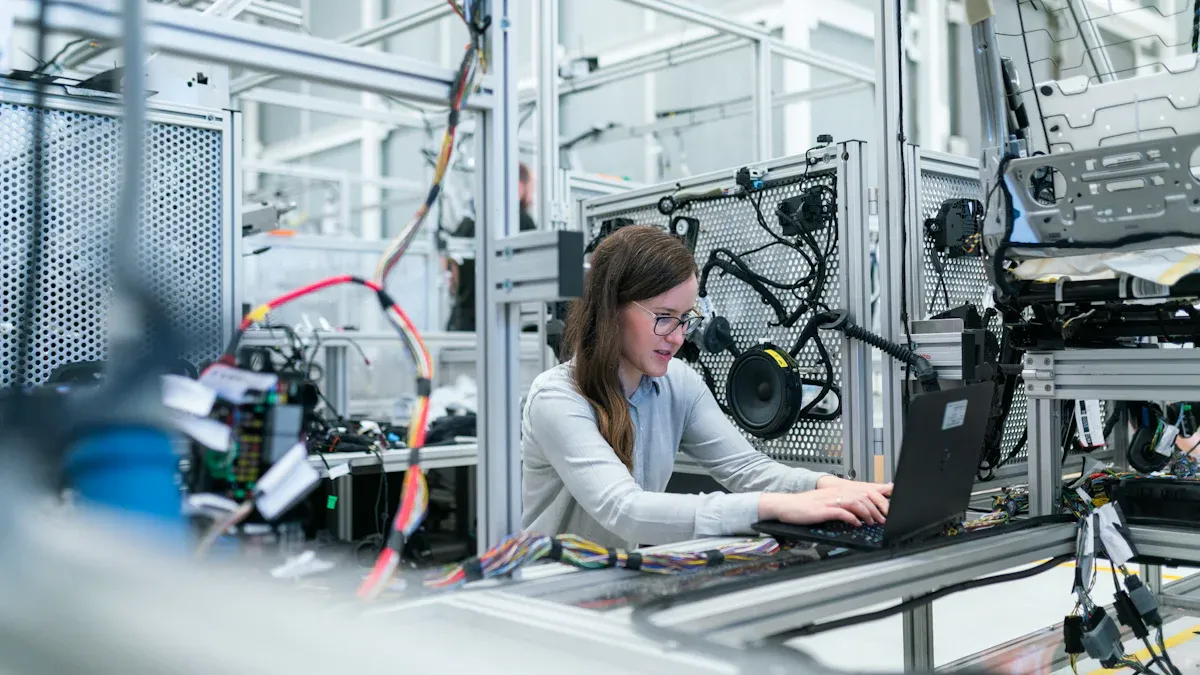
The process of making electronic products starts with design and prototyping. This step is very important because it sets up the whole project. You begin by making electronic circuit designs and picking the right parts. Different methods help in this stage, such as:
Additive manufacturing (3D printing)
CNC machining
Laser cutting and engraving
These methods let you create working and visual prototypes. Working prototypes check usability and performance. Visual prototypes focus on how things look. Rapid prototyping technologies make development faster. They allow quick changes based on feedback. This flexibility lowers initial costs and speeds up the time to prototype.
After you finish the design, you go to material sourcing. This step means getting high-quality parts needed for your product. You must make sure the materials meet industry standards. This helps avoid problems later in the process.
Assembly and Testing
Once you have your parts, the next step is assembly. This means putting electronic parts on the printed circuit board (PCB). You follow clear instructions during mass production to keep quality and consistency. Here are the standard steps for assembly:
Detailed Instructions: These help ensure high-quality assembly.
Step-by-Step Guides: They give specific instructions for putting together parts.
Documentation Requirements: These explain the needed documents for compliance.
After assembly, testing is very important. You need to check that each product meets performance standards. Quality control processes are key here. They focus on prevention, finding, and checking throughout the manufacturing process. For example, solder paste inspection finds defects early. Functional testing makes sure the board works as it should.
Quality control checks help keep important inputs stable, reducing defects. Finding issues early leads to fewer defects. This ensures your products are reliable and meet customer needs.
OEM Role in Production

OEM Responsibilities
As an OEM, you have an important job in making electronic products and parts. Your tasks include:
Manufacturing Components: You make key parts like processors, PCBs, and displays. These parts are crucial for the final products.
Turnkey Production: You provide full electronics production based on what customers need. This helps manufacturers sell products under their own brand.
Quality Assurance: You make sure high-quality standards are met while cutting costs and time to market. This support includes design, assembly, and testing.
To follow industry rules, you must include quality checks in every step of production. Here’s how you ensure compliance:
Stage | Description |
|---|---|
Design and Development | You add compliance into product design. This means finding rules and choosing materials that follow them. |
Sourcing and Supplier Qualification | You check incoming parts against quality and rule requirements. This often means working with certified suppliers. |
Manufacturing | You use process controls, like checking equipment and quality inspections. This makes sure standards are met. |
Documentation | You keep clear records of design changes, test results, and compliance statements throughout the product’s life. |
Post-Market Surveillance | You handle feedback from the field, track problems, and ensure compliance with reporting rules after the product is delivered. |
Collaboration with EMS
Working with EMS providers is key for improving production. Together, you handle different parts of the manufacturing process, like design engineering, quality control, and supply chain management. This teamwork helps you boost production efficiency while keeping high-quality output.
Here are some benefits of teaming up with EMS providers:
Design for Manufacturability: EMS partners help speed up innovation and cut down on expensive redesigns.
Streamlined Processes: A fully integrated EMS partner improves efficiency without losing quality.
Real-Time Metrics: Digital connections through ERP integration create transparency and allow quicker decision-making.
By syncing material arrivals with production schedules, you avoid extra inventory storage. This cuts costs and matches production with real demand. Also, strict process controls and quality checks reduce returns and warranty claims, ensuring reliability at scale.
Benefits of Outsourcing Manufacturing
Cost Efficiency
Outsourcing manufacturing can help your business save money. When you work with OEMs and EMS providers, you get better prices. This is because you can buy materials in bulk. You also do not have to spend a lot on manufacturing machines. Here are some ways you can save money:
Aspect | Description |
|---|---|
Material Costs | You save money on materials by buying in bulk. |
Labor | You lower labor costs by using specialized manufacturers. |
Equipment | You avoid spending money on manufacturing machines. |
Overhead Expenses | You reduce overhead costs from running a manufacturing facility. |
By outsourcing, you can use your resources for other important tasks. This lets you change quickly when the market shifts, improving your overall production efficiency.
Access to Expertise
Outsourcing also gives you access to special skills that your team may not have. EMS providers have advanced skills in areas like PCB assembly and sourcing parts. They have a lot of experience in testing and quality control, which helps keep high standards for your electronic products. Here are some benefits of using their skills:
Knowledge of new technologies and best practices.
Ability to manage different product lines and adjust to changes.
By working with EMS providers, you can improve your manufacturing without needing to invest a lot in-house. This partnership lets you focus on new ideas and product improvements, which helps you get your products to market faster.
Outsourcing manufacturing not only saves money but also improves the quality of your electronic products. By depending on experts, you make sure your products meet high standards, making them more competitive in the consumer electronics market.
Challenges in Electronics Manufacturing
Supply Chain Issues
Electronics manufacturing has many challenges, especially with supply chains. Recent global events have caused problems. These issues led to late shipments and delays in making products. Here are some common supply chain challenges:
Global events, like the COVID-19 pandemic, disrupt supply chains.
There are shortages of skilled workers. Over 70% of manufacturers struggle to hire and keep qualified employees.
Cyber risks can harm data privacy and hurt your company’s reputation.
The pandemic caused big staffing shortages in microchip factories worldwide. This led to delays in production and local problems, like factory closures. These issues affected many industries that rely on semiconductors. To adapt, companies are changing their ordering methods. They now order semiconductors earlier, while manufacturers adjust their plans to deal with ongoing supply problems.
Regulatory Compliance
Regulatory compliance is another big challenge in electronics manufacturing. You need to follow many rules to make sure your products are safe and meet environmental standards. Here are some important regulations you should know about:
Regulation/Standard | Description | Implications |
|---|---|---|
Restriction of Hazardous Substances (RoHS) | Limits harmful materials in electronics | Not following this can lead to product bans and fines. |
Toxic Substances Control Act (TSCA) | Regulates chemicals in manufacturing | Helps prevent environmental damage and health risks. |
Federal Communications Commission (FCC) Regulations | Governs electromagnetic compatibility | Important for product certification in the US. |
California Proposition 65 | Requires warnings for harmful chemicals | Affects packaging and labeling in California. |
ISO 9001 | Quality management system standard | Ensures consistent product quality. |
Changes in environmental rules also affect your manufacturing processes. For example, designing PCBs with sustainability in mind helps reduce waste and use resources better. Getting materials from sustainable suppliers ensures responsible use and compliance with regulations.
Technological advancements also change the challenges you face. Smart manufacturing and IoT integration improve efficiency but need constant updates to new technologies. As you deal with these challenges, staying informed and proactive will help you stay competitive in the consumer electronics industry.
Future Trends in Electronics Manufacturing
Automation and AI
Automation and artificial intelligence (AI) are changing electronics manufacturing. You will see big improvements in these areas. Here are some main benefits of automation and AI in manufacturing:
Increased Efficiency: Automation works all day and night, boosting productivity.
Enhanced Quality: Real-time checks make sure products are high quality.
Cost Savings: You can lower labor costs and cut down on waste.
Flexibility: Automated systems can quickly change to meet production needs.
Scalability: As demand rises, automated processes can easily grow.
AI is very important for predicting maintenance needs. For example, a 2024 report from the National Association of Manufacturers said AI maintenance cut equipment downtime by 50%. Companies like Intel and Apple use AI to spot problems before they happen, keeping operations smooth. Foxconn, with over 100,000 robots, shows how automation can greatly lower labor costs while keeping quality high.
Sustainability Practices
Sustainability is now a key focus in electronics manufacturing. Many companies are starting eco-friendly practices. Here are some common sustainability efforts:
Energy Efficiency: Manufacturers use energy-saving machines and improve production to save energy.
Waste Reduction: Repair and refurbishment programs help products last longer and reduce electronic waste.
Eco-Friendly Materials: Many companies follow the RoHS Directive and use recycled materials, like aluminum.
These sustainability efforts help the environment and boost your brand’s image. Businesses that save resources often enjoy cost savings and more customer loyalty. By using sustainable practices, you can improve your competitiveness in the consumer electronics market.
As the global market changes, staying updated on these trends will help you face challenges and find solutions in electronics manufacturing.
Knowing how electronic products are made is very important for doing well in the consumer electronics market. Here are some key points:
Aspect | Importance |
|---|---|
Quality Control | Makes sure all products meet the high standards customers expect. |
Sustainable Practices | Helps lessen the harm to the environment during manufacturing. |
EMS Providers | Lets businesses focus on what they do best and be more creative. |
Outsourcing manufacturing to OEMs has many advantages. You can focus on developing products, marketing, and selling. This plan helps you use your resources for new ideas and growth.
As the industry changes, it’s important to keep up with trends like automation and sustainability. Adopting these changes will help you stay competitive and meet market needs.
FAQ
What is an OEM in electronics manufacturing?
An OEM, or Original Equipment Manufacturer, makes parts or products. Other companies sell these under their own brand. They take care of making things, checking quality, and sometimes designing. This ensures high standards for electronic products.
Why should I consider outsourcing to an OEM?
Outsourcing to an OEM can help you save money and time. You get special skills and resources. This lets you focus on developing products and marketing while making sure production is high quality.
How does quality control work in electronics manufacturing?
Quality control means checking things at every step of production. It makes sure parts meet industry standards and specifications. This process helps find problems early, which reduces waste and ensures reliable products.
What are the main challenges in electronics manufacturing?
Main challenges include supply chain issues, following rules, and keeping quality high. Companies need to adjust to changes in technology and market needs to stay competitive.
How can automation improve the manufacturing process?
Automation makes things more efficient and cuts labor costs. It helps keep quality consistent and speeds up production. Automated systems can quickly change to meet new production needs, boosting overall productivity.
See Also
The Impact Of Precision Metal Strips On Electronics Quality
Effective Strategies To Lower Plating Mold Expenses In Electronics
India’s PLI Electronics Benefit From Moldless Selective Plating Solutions
Vietnam’s OEM Lines Utilize Continuous Roll-To-Roll Metal Etching
Tool-Free Selective Plating Drives Advanced Reel-To-Reel Tech Production