
The electroplating industry is very important in today’s manufacturing. This process makes products stronger and better looking. You might not know that many industries depend on electroplating. These industries include cars, airplanes, electronics, and machines. The worldwide market for electroplating was about USD 796.96 million in 2025. It is expected to grow a lot. By 2034, it could reach USD 33.44 billion. Knowing how this industry affects us is important. It helps us understand its impact on the environment, economy, and technology.
Key Takeaways
Electroplating makes products stronger and better looking. This is important for industries like cars, planes, and electronics.
The electroplating industry has environmental problems. But rules and green practices help cut down pollution.
There are many job openings in electroplating. The average pay is about $95,544, which makes it a good job choice.
The electroplating market is growing fast. It is expected to reach USD 33.44 billion by 2034. This growth is due to new technology and higher demand.
New ideas in electroplating, like automation and green methods, make work easier and create less waste. This helps both the industry and the environment.
Environmental Concerns
Pollution Issues
The electroplating process can cause a lot of pollution. Many pollutants come from electroplating plants. Common pollutants are:
Cadmium
Copper
Nickel
Chromium
Zinc
Silver
Gold
Palladium
Cyanide
Chromium-laden rinses
Acidic solutions
Toxic organics
Dyes and pigments
These harmful substances can pollute local water sources. Heavy metals like lead and cadmium can seriously harm aquatic life and human health. When these metals get into water, they can build up in fish and other creatures. This buildup can disrupt the food chain and hurt people who eat contaminated fish or drink polluted water.
To fix these pollution problems, the electroplating industry needs to use eco-friendly practices. Regulations are very important in this effort. For example, the Clean Water Act and the Clean Air Act set rules for emissions and waste. These laws help make sure that electroplating companies reduce their environmental harm.
Regulation Type | Description |
|---|---|
NESHAP | Summary of rules controlling air emissions from plating and polishing |
NESHAP | Current rule on chromium emissions from chromium electroplating and anodizing tanks |
EPA | Rule and information for chromium electroplating, including history and links to rules |
NPDES | National Pollutant Discharge Elimination System, which controls water pollution by regulating sources that release pollutants into U.S. waters |
MPCA | Air permitting publications and guidance for hazardous waste management and stormwater rules |
Waste Management
Electroplating operations create hazardous waste. This includes cyanide solutions and heavy metal sludge. Proper waste management is key to stopping environmental pollution. These waste materials need special treatment before disposal.
Current waste treatment methods work well to lower environmental harm. Techniques like chemical precipitation, ion exchange, and membrane filtration help remove pollutants. These methods allow water reuse and cut down on overall water use. They also stop groundwater pollution and help recover valuable metals.
By using these waste management solutions, the electroplating industry can show it cares about the environment. Using greener chemistry and reducing waste will create a more sustainable electroplating process.
Economic Contributions
Job Creation
The electroplating industry is important for creating jobs. It offers many job opportunities for different skill levels. Many people find steady jobs in this field, which usually pays well. For example, the average yearly pay for workers in electroplating is $95,544. This means they earn about $46 an hour. This pay is lower than the average in durable manufacturing, which is $121,746 a year.
Sector | Average Annual Wage | Average Hourly Wage |
|---|---|---|
Electroplating Sector | $95,544 | $46 |
MFG Durable Industry | $121,746 | N/A |
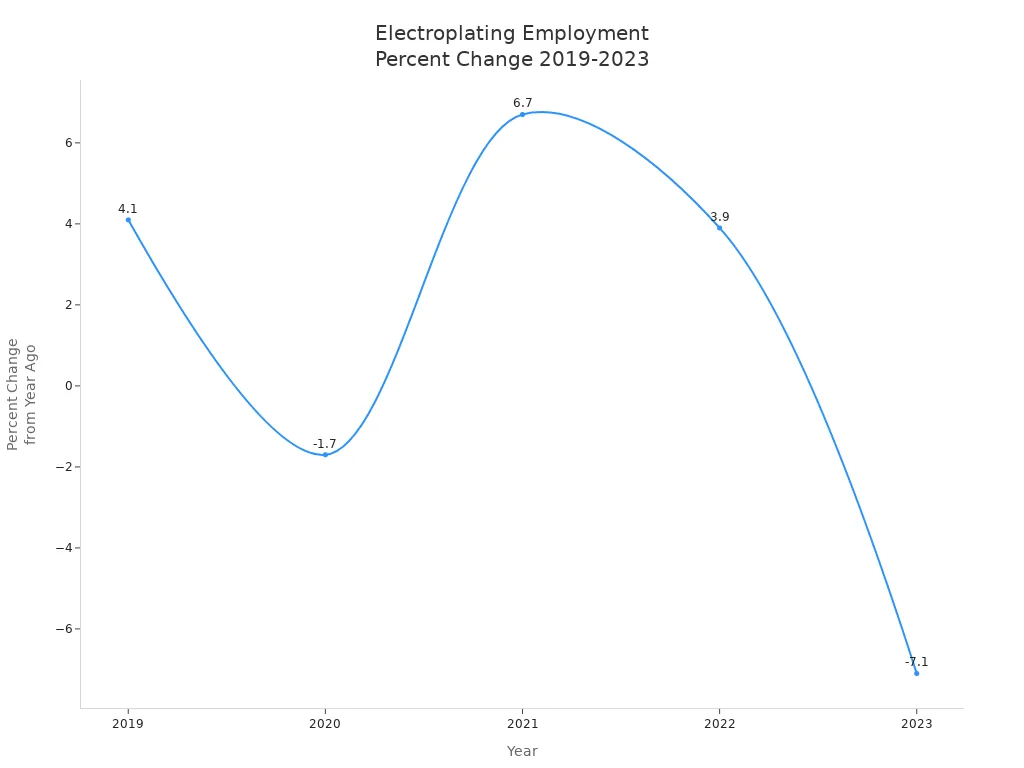
In the last ten years, jobs in the electroplating industry have changed a lot. The table below shows how employment changed from 2019 to 2023:
Year | Percent Change from Year Ago |
|---|---|
2023 | -7.1 |
2022 | 3.9 |
2021 | 6.7 |
2020 | -1.7 |
2019 | 4.1 |
Market Trends
The electroplating market is growing quickly. It was worth USD 4,210 million in 2025 and is expected to reach USD 7,174.28 million by 2033. This growth means a compound annual growth rate (CAGR) of 6.89% from 2026 to 2033. Several things are causing this trend:
New technology in automated plating and eco-friendly methods.
More demand from car, electronics, and airplane industries.
Rules and efforts for environmental safety.
Countries like China, India, and Germany are leading this growth. China is expected to grow at a rate of 7.6%, thanks to more car manufacturing and electric vehicle production. India follows with a 7.0% growth rate, helped by its car industry and government support for business growth. Germany, with a 6.4% growth rate, benefits from its advanced manufacturing skills and need for high-quality surface treatments.
As you can see, the electroplating industry not only helps create jobs but also shows strong market trends that show its importance in the world economy.
Innovations in Electroplating
Efficiency Improvements
New changes in electroplating have made it much more efficient. There are many new ideas that help save time and money:
Eco-friendly electroplating methods use fewer harmful chemicals.
Nanotechnology creates very thin, strong coatings.
Automated systems make production more consistent.
Pulse electroplating gives better control over how thick the coating is.
High-performance coatings resist wear and corrosion well.
Energy-saving processes cut down on costs.
Automation and digital monitoring are key to boosting productivity. They improve process control and reduce waste. For example, AI and machine learning help predict when maintenance is needed. This makes operations better and increases efficiency. Real-time adjustments help reduce defects and save energy, which is important in fields like aerospace and medical devices.
Quality Control
Quality control is very important for getting good electroplating results. Different methods help ensure that coatings are even and defects are avoided. Here are some useful quality control methods:
Quality Control Method | Benefits |
|---|---|
Process Control | Makes sure coating thickness is even and prevents defects. |
Water Quality Management | Keeps the right chemical balance for steady results. |
Equipment Design | Improves reliability and consistency in plating results. |
Integrated monitoring systems check important factors like current density and chemical balance. This allows for real-time changes, ensuring evenness and cutting down on waste. By spotting trends in production quality, these systems help lower scrap rates and rework.
New ideas in electroplating have also lowered defect rates in finished products. For instance, better process control reduces problems like poor adhesion. Eco-friendly options, like trivalent chromium, lower health risks while keeping quality high. Advanced coating technologies create thicker, more even coatings, which further cut down on defects.
Benefits of Electroplating
Durability and Aesthetics
Electroplating has many important benefits for durability and looks. It helps items resist wear and corrosion. This means parts last longer. The process protects products from tough environmental conditions.
Here’s how electroplating helps different industries:
Industry | Measurable Benefits of Electroplating in Durability |
|---|---|
Automotive | Makes parts like bumpers and engines last longer by preventing rust and corrosion. |
Aerospace | Coatings can handle extreme conditions, ensuring parts work well and reliably. |
Electronics | Increases resistance of connectors and circuit boards to wear and oxidation, helping them last longer. |
Industrial Machinery | Cuts down on wear and tear on tools and gears, which helps them last longer and lowers maintenance costs. |
Besides making items durable, electroplating also makes them look better. It adds a shiny coating that improves how products appear. You can see this in things like jewelry and car interiors. The electroplating market focuses on these decorative coatings, which are important for attracting customers in many industries.
Industry Applications
Electroplating is used in many fields. The automotive, aerospace, electronics, and jewelry industries depend on it. The automotive industry alone makes up about 30% of global demand. They use electroplating for both function and decoration in car parts. Electronics come next, making up nearly 25% of the market. Here, electroplating is key for tiny parts to ensure they work well. The aerospace and medical fields together account for about 15%, using electroplating for high-quality coatings in precise equipment.
Common materials used in electroplating include:
Gold: Used in electronics for good conductivity and to resist oxidation.
Silver: Chosen for its electrical conductivity in electronics and its nice look in decorative coatings.
Nickel: Often used for protection against corrosion and for decoration in cars.
Chromium: Known for being hard and resisting tarnish, used in car decorative coatings.
These benefits show why electroplating is essential in modern manufacturing. It helps make products that are strong and attractive.
The electroplating industry is very important in today’s manufacturing. It makes products stronger and better looking. It also helps create jobs and boosts the economy. As you can see, the industry has some environmental problems, but it is changing with new ideas. Companies are putting money into eco-friendly chemicals and recycling waste to be more sustainable.
In the future, the electroplating market is expected to reach USD 33.7 billion by 2036. This growth will come from new technology in automation and smart monitoring systems. These new tools will help save energy and make things work better. By focusing on being sustainable, the electroplating industry can keep growing while reducing its impact on the environment.
FAQ
What is electroplating?
Electroplating is a method that uses electricity to add a layer of metal to a surface. This process makes objects stronger and better looking.
What industries use electroplating?
Many fields use electroplating, like cars, airplanes, electronics, and jewelry. Each industry gains from stronger and nicer-looking products through this method.
How does electroplating affect the environment?
Electroplating can cause pollution if not handled correctly. Harmful chemicals can pollute water sources. However, rules and eco-friendly methods help reduce these environmental issues.
What are the benefits of electroplating?
Electroplating has many benefits, like better resistance to rust, improved wear resistance, and a nicer appearance. These advantages make it important for many uses in different industries.
Is electroplating safe?
When done with the right rules and safety steps, electroplating is safe. Companies need to follow guidelines to handle dangerous materials and keep workers and the environment safe.
See Also
Strategies to Lower Plating Mold Expenses for Electronics Makers
The Impact of Selective Electroplating on Lead Frame Excellence
Moldless Selective Plating Solutions for Indian Electronics and OEMs
Continuous Moldless Selective Plating for Gold on Thin Strips
Reducing Gold Plating Expenses in I/O Interfaces Using Moldless Techniques